
A psychiatric diagnosis analysis, in most cases, is a good and enabling first step towards an understanding of mental health problems and assistance in deciding on the most life-affirming option of services. This is to be accomplished in a respectful, supportive, and comprehensive manner at Orlando’s Premier Psychiatry and will never be hurried or demotivating.
A psychiatric diagnostic evaluation is both an emotional introspection and a very elaborate conversation, rather than simply label-based. It targets the purification of symptoms, discovering trends, and prescribing individualized and evidence-based support in response to the peculiarities of individuals.
The guide explains what a psychiatric diagnostic evaluation is, who the audience is to be targeted, when a diagnosis needs to be conducted, its expectations, and the way to proceed to diagnose a person correctly and administer appropriate care.
What is a Psychiatric Diagnostic Evaluation?
Psychiatric diagnostic evaluation refers to an elaborate examination of a patient carried out by a psychological expert, or more simply known as a qualified mental health worker (i.e., psychiatrist, psychologist, or licensed clinician), to better understand the functional placards of the individual in terms of emotional, behavioral, and cognitive aspects.
It is usually analyzed based on:
- Omnibus expert interview.
- Surveillance Medical, psychiatric, and family history Surveillance medical history Surveillance of medical history.
- Monitors mood, thinking, and behaviors.
- There are standardized screening tools or questionnaires in case there is a need to use them because of the situation.
This does not mean what a person with a diagnosis is experiencing, but it is merely a knowledge of what this person is experiencing and the reasons and how to implement care that is at least invasive and empathetic.
Who is a Psychiatric Diagnostic Evaluation For?
The practice of psychiatric diagnostic evaluation cuts across the lifespan group of individuals, including children, adolescents, adults, and older adults, provided that the affected functions are their emotional and behavioral functions.
These concerns may include:
- Violentness, chronic depression, nervousness or orthostasis.
- Fear, hysterics, worry.
- Hyperactivity/Attention Disorder.
- Sleep disturbances
- Trauma-related symptoms
- Change of psychological approaches, conduct or functioning.
Each test might be beneficial to any person who wants to define his/her mental state or get assistance and advice.
When is a Psychiatric Diagnostic Evaluation Recommended?
In the event of such symptoms, it is possible to recommend a psychiatric diagnostic test:
- Persist over time or worsen
- Breaks from social and school and daily obligations.
- Antonio’s actions against the excellent past care.
- Onset of roles after the occurrence of a major life stressor or a major trauma.
Evaluation is also typically a condition before the beginning of psychiatric medication management or even a change in an already existing support regimen.
What to Expect During the Evaluation
The interview shall be traditionally in a confidential atmosphere. The clinician will ask thoughtful and open-ended questions and listen and clarify each part of the process. It is mutual discourse founded on knowledge and not opinion.
The clients are encouraged to provide feedback with regard to their experiences in their own time. That is achieved by the development of trust and emotional security.
Who Can Be Evaluated?
Psychiatric diagnostic examination can be ordered by any person. This includes:
- Individuals who desire a more profound repertoire in their brains.
- The worry of parents about the behavior of the child or their emotional state children’s mental health services are available for early intervention.
- Stressed patients in adulthood, post-traumatic stress disorders, mood fluctuations, and life problems, including those struggling with anxiety or depression.
There is no such thing as consultation and weakness, so consultation is an initiative of wellness.
What is Included in a Comprehensive Psychiatric Evaluation?
Psychiatric diagnostic tests may involve:
- The close-up clinical interview.
- Psychiatric, medical, and family history Review.
- The present symptomatology and problems are discussed.
- The look, attitude, cognition, and cognition (aphasia).
- Application of proper screening equipment/tests.
They, in totality, present a complete clinical image that can not only help in proper diagnosis but also in effective prescriptions that will cure the issue.
When a Family Member is Involved
Feedback about family members may be quite helpful with the consent of the client, and especially in the case of children or teenagers. Observations in families may provide beneficial data concerning the symptoms in different arrangements and periods of time. Family therapy may also be recommended as part of a holistic care plan.
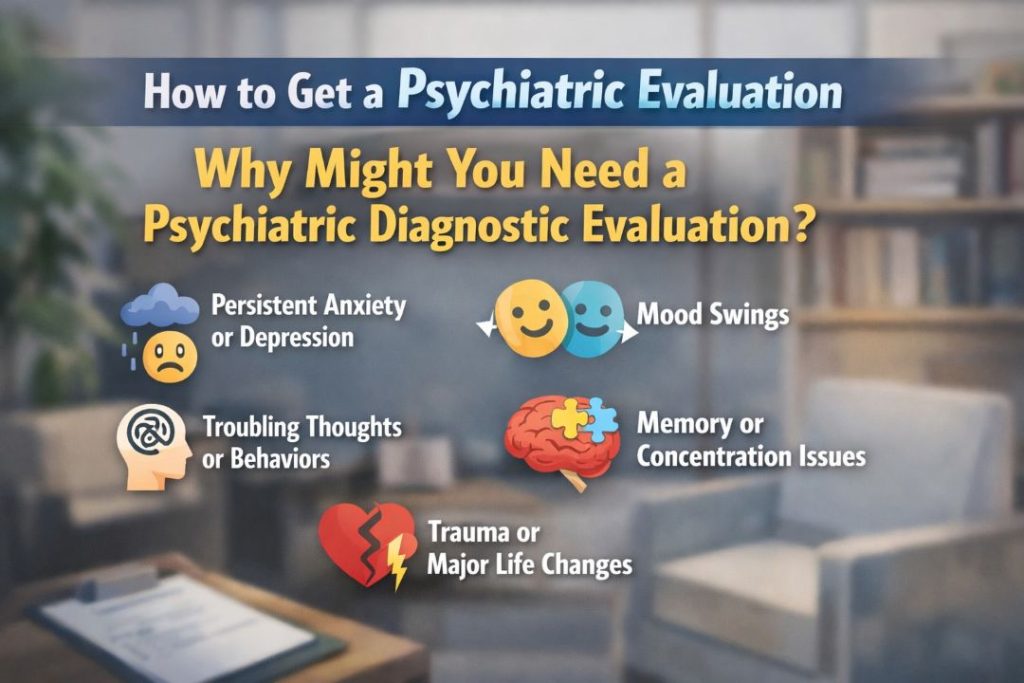
Why Might You Need a Psychiatric Diagnostic Evaluation?
Psychiatric diagnostic evaluation can:
- Eradicate disturbing or frightening symptoms.
- Eradicate medical comorbidities.
- Justify a proper diagnosis, whether it’s bipolar disorder, schizophrenia, or a personality disorder.
- Enhance the proper planning of the support.
Whether the care necessarily means therapy, medication, or lifestyle change, or can be founded on some mix of assurances, the assessment is among the main pillars of long-term mental health care.
How Long Does a Psychiatric Diagnostic Evaluation Take?
Most of the tests measure between 60 and 90 minutes. In other cases, additional sitting sessions may be needed so that more history can be obtained, to achieve an assessment, or to validate findings.
It is also never about the speed but about care and accuracy.
Services That May Follow an Evaluation
Based on the requirements of a person, a psychiatric diagnostic assessment may lead to:
- Mood, anxiety, trauma-related or attention disorder evaluation.
- Diagnostic measures.
- Drug assessment and control.
- Psychotherapy (CBT, DBT, trauma-informed therapy, etc.) planning.
- Follow-ups and further psychiatric aid, including telehealth appointments for ongoing accessibility.
Evaluation will assist in ensuring that all people will be placed in services that can and will enable him or her to cure and grow.
Find Psychiatric Support in Orlando, FL
When you need some clarifying thoughts, encouragement, or information on what to do next, a psychiatric diagnostic evaluation can be of significance. Orlando Premier Psychiatry is a place of caring and evidence-based assessments unique to an individual.
Get started today and make a call to book your secretive psychiatric diagnostic evaluation and take the initial step toward the correct clarity and viable mental healthcare.
Disclaimer
This content is provided for informational purposes only and is not intended to replace professional medical advice, diagnosis, or treatment. Always consult a qualified healthcare provider regarding mental health concerns or therapy decisions.
Frequently Asked Questions
Why is a psychiatric evaluation important?
A psychiatric evaluation is important because it provides an accurate understanding of mental health symptoms. It helps identify conditions early, guides effective treatment decisions, and ensures care is personalized rather than based on guesswork or assumptions.
Why would a judge ask for a psychological evaluation?
A judge may request a psychological evaluation to better understand a person’s mental state, decision-making ability, or emotional functioning. These evaluations can inform legal decisions related to competency, custody, sentencing, or support recommendations.
What is the importance of mental status evaluation?
The mental status evaluation assesses how a person is thinking, feeling, and functioning at the moment. It helps clinicians observe mood, thought processes, memory, and attention, which are essential for accurate diagnosis and support planning.
What are they looking for in a psych evaluation?
In a psych evaluation, clinicians look for patterns in symptoms, behavior, and thinking. They assess emotional health, risk factors, and functional challenges to determine whether a mental health condition is present and how best to treat it.
What is the purpose of a psychiatric diagnosis?
The purpose of a psychiatric diagnosis is to clearly identify a mental health condition so support can be targeted and effective. A diagnosis helps guide therapy, medication choices, and support services tailored to the individual’s needs.
Is a psych evaluation worth it?
Yes, a psych evaluation is often worth it because it brings clarity and direction. Understanding what’s happening can reduce uncertainty, prevent unnecessary care, and lead to care that genuinely improves quality of life.
References
- American Psychiatric Association. (2022). DSM-5-TR: Diagnostic and Statistical Manual of Mental Disorders (5th ed., text rev.).
- American Psychological Association. (2023). Clinical Practice Guidelines.
- National Institute of Mental Health. (2024). Mental Health Assessments and Diagnosis.