Adolescent psychiatric service is an essential element during one of the most emotionally complicated periods in life. Adolescence is a time of intense brain growth, changing identities, academic stress and social transition. In the case of mental health issues, prompt and adequate psychiatric care can prove to be significant not only to adolescents but also to their families. Evidence-based, compassionate, and developmentally appropriate adolescent-based care would be present in the Orlando Premier Psychiatry.
This guide provides the perception of the nature of psychiatric care in teens when they require assistance and the manner in which the programs are facilitated among teens as well as how the family might support the teens in their quest to overcome emotional and behavioral challenges.
Understanding Adolescent Mental Health
Adult issues, in small bodies, in no way suffice to describe the teen years. The brain of an adolescent is just developing and especially the parts of the brain are involved in controlling impulses, controlling emotions, and long-term planning. Due to this fact, adolescents can have stronger emotions and may not be able to express themselves.
Issues common in teenage years are:
- Constant depression or anger.
- School anxiety, peer anxiety, and future anxiety.
- Concentration and attention disorders.
- Abnormal moods affecting normal functioning.
- Disturbed motivation, appetite or sleep.
Where these problems are disturbing the performance, relationship or self-esteem of the school-going age group, psychiatric attention may be availed to teens and the families coached on how to help their children to go through the circumstances.
Orlando Premier Psychiatry’s Approach to Teen Care
The strategy at the Orlando Premier Psychiatry focuses on the strategy of early detection and prompt management of the mental health issues faced by adolescents. Studies have always been circling around the fact that that the issues experienced in terms of emotions and behavior during the teen years can be countered in an effort to minimize the chances of facing similar issues in adulthood.
Effective psychiatric practice includes:
- Medical knowledge
- Therapeutic support
- Family involvement
Arranging with schools or other supporting organizations, where required.
The holistic method is appreciative of:
- Early evaluation
- Personalized service plans.
- These are such changes and continuous observation.
- The communication with the families and caregivers.
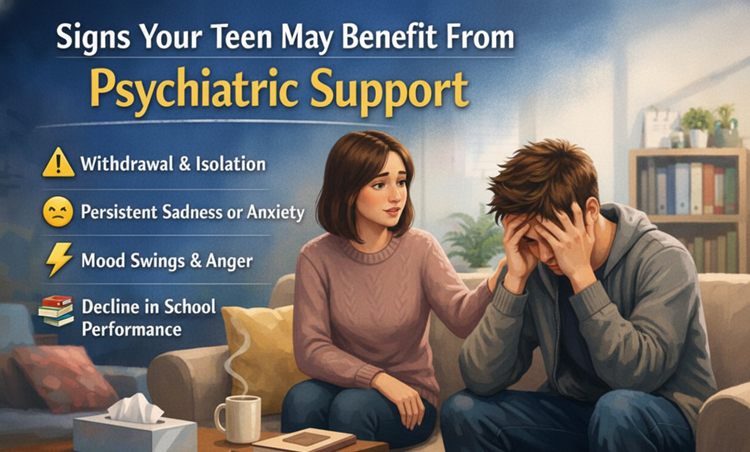
Signs Your Teen May Benefit From Psychiatric Support
All emotional changes may not be indicative of mental illness. Nevertheless, some trends can tell when they need psychiatric services, such as teenagers, and these are:
- Overwhelming feelings or those that cannot be easily handled.
- Quitting friends or family, as well as activities that she was previously enjoying.
- Loss of academic performance.
- The changes in behavior that become persistent (lasting weeks or months).
- Sensations of worthlessness, desperation or hopelessness.
Follow your gut in the role of a parent or a caregiver. You are the parent of a teen and wanting to seek help is an indication that you care and not a failure.
What Psychiatric Services for Adolescents Include
Comprehensive Psychiatric Evaluations
Psychiatric assessment examines more than the superficial actions. It takes into account emotional well-being, physical well-being, family history, scholastic stress factors, and social factors. This cross-examination is the basis of quality indivisible care.
Therapy and Counseling
Therapy assists teenagers to gain more knowledge about their emotions, acquire coping mechanisms as well as enhance communication. It also gives a secure, non-judgmental place where adolescents can speak freely without the fear of being judged.
Medication Management (When Appropriate)
The medication is not necessarily required. It is prescribed wisely when it is recommended, told in simple and easily understood language and checked on about its effectiveness and unwanted side effects.
Family Guidance and Support
Mental health care of adolescents usually is effective with family involvement. Education and support assist the caregivers to just respond better, minimize the conflict, and encourage home-based progress.
Why Specialized Adolescent Psychiatry Matters
Teenagers do not become wee adults. The purpose behind the adolescent psychiatric care is to address the developmental issues, communication styles, and the real life pressures that adolescents are currently experiencing; this is the social media, academic competitiveness and identity termination.
Adolescent care assisted:
- Practices of developmentally appropriate care.
- The adolescent’s freedom regarding families.
- Improved participation and increased performance over the long-term.
Supporting Your Teen
One of the components of the healing process is professional care. The parents and caregivers can support the progress by:
- Listening without making an effort to correct the situation.
- Having a consistent flow and organization.
- Promoting healthy eating, physical exercise and sleep.
- Eliminating mental health stigma.
- Minor, regular actions can tend to impact more than drastic actions.
When Immediate Help Is Needed
Should a teenager express self-harm thoughts, not be safe, or have an emotional crisis, it is required to be helped in a rather urgent way by a professional. The management of adolescent psychiatry involves the examination of the situation and crisis management to ensure the safety of the situation and the stabilization of the situation during the emergency.
Take the Next Step Toward Support
Should the teen be experiencing emotional, behavioral or academic problems, then professional assistance may help in clarification of what is going on and what should be done next. Contact Orlando Premier Psychiatry to arrange an anonymous psychiatric assessment of adolescents. Clear advice can have a good implication on your adolescent and on your family as well.
Disclaimer
This blog content is intended for informational and educational purposes only and does not constitute medical advice, diagnosis, or services.
Key Takeaways
- Psychiatric Services for Adolescents address emotional, behavioral, and developmental concerns during critical years
- Early support can prevent long-term mental health challenges
- Services plans are personalized, not one-size-fits-all
- Family involvement strengthens outcomes
- Professional care helps teens build resilience, not dependence
Frequently Asked Questions
What mental health resources are available for teens?
Teens can access outpatient psychiatry, therapy, school counseling, community programs, crisis hotlines, and family-based support services. Psychiatric Services for Adolescents often coordinate multiple resources to ensure comprehensive, consistent care.
How can I help my 16-year-old with mental illness?
Start by listening without judgment and validating their feelings. Encourage professional evaluation, maintain routines, and stay involved in support and planning. Parental support combined with Psychiatric Services for Adolescents improves outcomes significantly.
What therapy works best for adolescent mental health?
The most effective therapy depends on the teen’s needs. Cognitive-behavioral, family-based, and skills-focused approaches are commonly used. Psychiatric Services for Adolescents tailors therapy methods to individual symptoms and goals.
What to do if my teen is having a mental health crisis?
Ensure immediate safety first. Stay calm, remove potential hazards, and seek urgent professional help. Contact emergency services or a mental health crisis line if needed. Crisis intervention is a critical part of Psychiatric Services for Adolescents.
What is the 3-3-3 rule in mental health?
The 3-3-3 rule is a grounding technique for anxiety: name three things you see, three sounds you hear, and move three body parts. It helps teens refocus during overwhelming moments alongside professional care.
What to do with a troubled teenager?
Avoid punishment-based responses. Focus on understanding, consistent boundaries, and professional assessment. Psychiatric Services for Adolescents help identify underlying issues and guide families toward constructive, supportive solutions.