
If you’re wondering how long ketamine stays in your system, you’re not alone. One of the most frequently asked questions about ketamine use, or in anticipation of a drug test, is. For all reasons why it may have been administered, whether for medical or recreational use or as part of mental health treatment, knowing how the body processes ketamine can provide a bit of clarity. That comes down to several factors such as dosages, how often you use it, your metabolism, your body composition and your overall health.
The immediate effects of ketamine last for a few hours, although it is present in your system for a longer period than you will suspect. Depending on the method of testing, it can be picked up for different periods of time. It is important to know the length of time it can be detected with different testing methods.
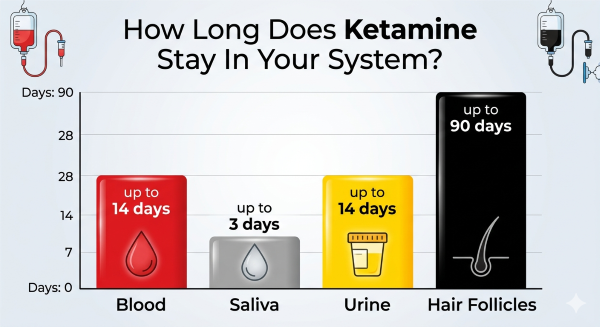
How long does Ketamine last in your system? Ketamine stays in the body for several days before passing out of your system. It can be detected the following ways for different lengths of time: blood tests may detect it for up to 24 hours, saliva tests for 1-2 days, urine tests for up to 14 days in some cases, and hair tests for up to 90 days.
A combination of factors, including how fast the drug leaves the body, the dosage given, an individual’s age, liver function, hydration level, and frequency of use, will all impact ketamine’s half-life in the system. The effects can be seen for several hours, but the presence of the substance can be detected for much longer.
Key Takeaways
- The effect of Ketamine lasts for 30 minutes to a few hours.
- Ketamine lingers in the body longer than the effects are noticeable.
- The most popular urine testing method is used for detecting ketamine.
- Detection windows depend upon the amount of drug use, metabolism, and the frequency of the drug use.
- Hair tests can detect usage of ketamine up to 90 days ago.
- With repeated use, the duration of ketamine detection in the system might be longer.
- Elimination rates can vary depending on an individual’s level of health.
What to Know About Ketamine?
Ketamine is a rapid-action dissociative anesthetic that alters perception of sight and sound and produces sedation, pain relief and amnesia. Used in human and veterinary medicine or under controlled conditions for the treatment of mental health disorders such as depression.
But the hallucinogenic and dissociative properties of Ketamine can also make it a drug that can be abused. If consumed outside of medical counsel, it can heighten physical, emotional, and cognitive issues.
If you’re interested in the effects, potential risks, or detection times of Ketamine, it’s important to understand how long it stays in your system.
How the Body Processes Ketamine
Once in the bloodstream, the liver mostly metabolizes ketamine. Ketamine is metabolized by the body and then excreted in the urine.
The half-life of ketamine is approximately 2.5-3 hours. Half-life is the amount of time it takes for the body to get rid of half of a substance. Ketamine itself may be detectable in the bloodstream for relatively short periods, but metabolites may be detectable for longer periods.
That’s what makes it so unique that it remains in your system even long after the effects have faded.
How Long Does Ketamine Stay in Your System by Test Type?
How long ketamine remains in your system depends on the type of drug test being used.
Urine Testing
One of the most widely adopted screening tests is urine testing.
Ketamine may be present in the urine for the following:
- After occasional use for up to 3 days.
- As long as 14 days in some people
- If frequently or heavily used.
Metabolites of this drug remain in the system and can be detected in urine longer than one might think; it might be there, as it continues to be excreted after the drug has stopped working.
Blood Testing
Blood testing will usually have a shorter time of detection.
Ketamine can be detected in the plasma for:
- The supplement should be taken approximately 24 hours after use.
- Sometimes a longer period (based on dosage and metabolism).
- This is not frequently used for regular screening since the blood level drops relatively rapidly.
Saliva Testing
Saliva tests for drug use are not as standard, but they can identify ketamine.
Detection periods include:
- No more than 24-48 hours following use
- Saliva is frequently used for recent drug use analysis.
Hair Testing
Hair folicular testing has the most extended testing window.
Ketamine can be found in hair for the following:
- Up to 90 days
- Occasionally longer depending on hair length
This type of test can detect the use of a substance within several months, as ketamine remains in your system for a long period of time; thus, it is incorporated into the hair growth.
Factors That Affect How Long Ketamine Stays in Your System
Substance processing is different for every individual. The amount of time Ketamine remains in the system to affect an individual can vary for several reasons.
Dosage
The more that is taken, the longer it takes the body to process and use it. Generally, the more that amount is, the larger the scientifically backed windows.
Frequency of Use
Those who repeatedly use ketamine may have metabolites in their system for longer than a “one-off” user. Can build up in the body due to frequent exposure.
Age
The metabolism tends to slow as people age. Older people may process drugs at a slower pace than younger people.
Liver Function
The liver is a major site at which ketamine gets metabolized, so the health of the liver can have a significant impact on the efficiency of the drug’s metabolism.
Body Composition
Elimination may be affected by body weight, hydration and general state of health.
Metabolic Rate
The rate of metabolism can influence how quickly someone might process ketamine or, for some with slower metabolisms, the time that might bring this into detection of their system.
How Long Do Ketamine Effects Last?
Its effects can last up to days or weeks, but the immediate effects usually last for a shorter period of time.
Common timelines include:
Long-term effects: Longer than 10 minutes
Peak effects: 15–60 minutes
After effects: Lingering for a few hours
Fatigue or mental effects that last: Up to 24 hours in some individuals.
It is important to distinguish feeling the effects vs. testing positive. While the ketamine metabolites can be detected, one person could feel totally fine at that time.
Signs That Ketamine Is Still Affecting the Body
Some people may have symptoms that last after the main symptoms have gone away, including:
- Mild confusion
- Drowsiness
- Difficulty concentrating
- Changes in mood
- Fatigue
- Impaired coordination
The symptoms are very individualized and may be dose- and health-dependent.
Can You Speed Up Ketamine Elimination?
A lot of individuals look for a solution that will get them rid of the substance from their body faster. Unfortunately, there is no scientifically backed way to truly increase the rate at which ketamine is eliminated from your system.
Healthy habits can help maintain healthy metabolic activity, which can include:
- Staying hydrated
- Getting adequate sleep
- Maintaining balanced nutrition
- Regularly exercise
But the most important is that time is the most important determinant for the elimination of ketamine and its metabolites.
When Should You Seek Professional Guidance?
When talking about ketamine use, questions are not always about detection times. Patients might experience alterations in mood, memory, concentration or general health after use.

Speak With Orlando Premier Psychiatry Today
Contact compassionate Orlando Premier Psychiatry for answers to questions and information about psychiatric care, mental health symptoms and mood changes, anxiety and depression, and any concerns about the use of ketamine. Our knowledgeable practitioners will offer you tailored guidance, support, and information to assist you in understanding your situation and options.
If you are seeking a confidential consultation with a psychiatrist on why therapy may be right for you, reach out to Orlando Premier Psychiatry today at (407) 565-3546.
Final Thoughts
So, what is the time frame of ketamine? The effect of ketamine can last for hours, although it is usually noticeable and is short-lived for ketamine. The window of detection depends on the type of test used, drug dose, frequency of use, and individual factors. Urine tests can detect the presence of ketamine for up to a few days and hair tests may reveal the use for up to months.
When people are worried about the use of Ketamine, signs of mental health issues or emotional well-being, seeking professional help can help to offer someone clarity and direction. The goal at Orlando Premier Psychiatry is to assist people in having a greater understanding of their mental health and to help them go forward with confidence.
Frequently Asked Questions
How long does ketamine stay in your system?
Ketamine is rapidly metabolized by the body. While its psychoactive effects typically last for 30 to 60 minutes, the substance and its metabolites can be detected in various biological samples for differing durations, ranging from a few hours to several days depending on the testing method.
How long does ketamine stay in your system after one use?
After a single use, ketamine is typically detectable in blood for about 24 hours, saliva for up to two days, and urine for several days. Individual metabolism and dosage significantly affect exact detection times.
Can ketamine show up on a standard drug test?
Most standard employment drug screens do not routinely test for ketamine. However, specialized drug panels can detect ketamine and its metabolites when specifically included in the testing process.
Does drinking water help remove ketamine faster?
Staying hydrated supports normal bodily functions, but it does not significantly accelerate ketamine elimination. Time, metabolism, liver function, and overall health remain the primary factors influencing drug clearance.
Why does ketamine stay in your system longer than its effects last?
The noticeable effects wear off quickly, but metabolites remain in the body after the drug is processed. Drug tests often detect these metabolites, extending the overall detection window significantly.
How long can ketamine be detected in hair?
Hair follicle testing can detect ketamine use for up to 90 days and sometimes longer. Because substances become incorporated into growing hair, this method provides the longest detection timeframe.
Disclaimer
This blog is intended for educational and informational purposes only and should not be considered medical advice, diagnosis, or individualized healthcare guidance. Always consult a qualified healthcare professional regarding questions about medications, substance use, mental health concerns, or personal health decisions.
References
- American Addiction Centers. “How Long Does Ketamine Stay in Your System?”
https://americanaddictioncenters.org/ketamine-abuse/how-long-does-ketamine-stay-in-your-system - U.S. National Library of Medicine – Ketamine Pharmacology and Metabolism.
- National Institute on Drug Abuse (NIDA) – Ketamine Drug Facts.
- Substance Abuse and Mental Health Services Administration (SAMHSA) – Substance Use and Mental Health Resources.