
Postpartum psychosis is a rare psychiatric emergency and can lead to extreme changes of consciousness, hallucinations, delusions, paranoia and confusion. This is a well-known case that has revived awareness regarding the need to recognize, diagnose promptly and treat mothers for issues in their mental health following childbirth without delay, and in a sensitive manner. If you are experiencing anything related to mental health after giving birth, Orlando Premier Psychiatry can help you be evaluated and receive treatment for your postpartum anxiety.
Why Postpartum Psychosis Needs More Attention
Postpartum psychosis has become front-page news. Postpartum psychosis is back in the spotlight thanks to the Lindsay Clancy case. It is a rare but severe psychiatric problem that may occur following childbirth, which interferes with the ability to sense reality.
Competition of mental state issues over the defendant determines who is correct in the case. Her defense has said she suffered from a postpartum psychosis; prosecutors have offered a different take on what happened. But what those arguments have in common with a clinical diagnosis is that they are wrong.
This is a more practical lesson for families and health care providers: Children’s signs and symptoms of postpartum mental health may change rapidly and alarming symptoms should not be ignored as routine fatigue or “baby blues.”
Postpartum psychosis is rare but may be a psychiatric emergency. Timely recognition and intervention can make a difference.
Key Takeaways
- It is a rare but emergency situation which needs psychiatric intervention, which is called “postpartum psychosis.”
- Symptoms range from confusion, paranoia, delusions, hallucinations, mania and agitation to significant behavioral changes.
- Significant sleep disturbances are a significant sign.
- Postpartum psychosis is not related to the “baby blues” or postpartum depression.
- News reports of the Lindsay Clancy trial should not be used to diagnose someone else.
- In the current DSM-5, PP is not classified as a specific disorder, but the clinician may diagnose and treat a psychotic or mood disorder around childbirth.
- Depending on the seriousness and the appropriate treatment time given, some degree of recovery is possible.
- Speed should be the rule of thumb for families when the new mother does not seem to be able to control herself or is not aware of what is going on.
What is Postpartum Psychosis?
Severe mental illness that develops after labor is called postpartum psychosis. It can manifest as a sudden change in thinking, perception, mood, and reality.
The incidence is low. The American College of Obstetricians and Gynecologists estimates that one to three babies out of every 1,000 women develop postpartum psychosis.
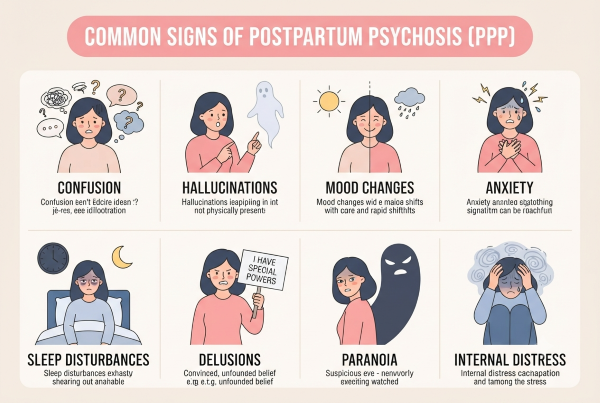
Symptoms may include:
- Firmly held false beliefs (delusions)
- Hallucinations
- Paranoia
- Confusion or disorientation
- Severe agitation
- Rapid mood changes
- Usually much higher levels of energy or mania.
- Impaired step-by-step or disorganized speech/behavior
- Extreme difficulty sleeping
- Disturbance of consciousness that there is something amiss.
- Of great sensitivity: it’s not always what people think postpartum psychosis looks like.
In the beginning, a mother can be more agitated, bewildered, restless, suspicious, or have trouble sleeping. She can sometimes act very differently from her usual self.
Postpartum psychosis is considered a psychiatric emergency, and urgent assistance is needed, according to the National Institute of Mental Health, and hospitalization could be necessary.
What Does It Reveal About Postpartum Diagnosis?
The ongoing trial about Lindsay Clancy has led to an important clinical issue coming to the forefront of the public dialogue: How to recognize and evaluate severe postpartum psychiatric symptoms?
Care should be taken in discussing the case.
The public reporting refers to a serious clash between the defense and prosecution over his or her mental condition and behavior. The defense said she had a faulty balance of reality from postpartum psychosis, whereas prosecutors believe she was doing it on purpose.
When in court, however, a psychiatric evaluation is not an evaluation.
Symptoms are assessed in conjunction with psychiatric history, medical history, behavior, functioning, risk, medication treatment, substance use (as it relates to the individual), among other clinical data, by a mental health professional. A legal finding pertains to a different set of questions and standards.
The difference is important, since they cannot diagnose the patient using the media.
The clinical lesson is on something else: awareness. Family members shouldn’t wait for it to be a glaring emergency before doing something if a new mother or mother is becoming more confused, paranoid, extremely sleep-deprived, agitated, or disconnected from reality.
Postpartum Psychosis vs. Postpartum Depression: What’s the Difference?
Postpartum depression is more common than postpartum (afterbirth) psychosis and deserves to be addressed.
According to the National Institute of Mental Health, a person with perinatal depression may experience depression throughout the week, lack the ability to sleep, have thoughts to self-harm or death, feel sad, have an anxiety disorder, bond poorly with the baby, low motivation, or feel guilty.
However, postpartum psychosis is a different condition, as symptoms can occur about the inability to interact with reality.
A postpartum depression sufferer, for instance, would be aware that she feels hopeless or overwhelmed. An individual going through psychosis may internalize what is untrue or even think they can see something that does not exist.
It is an important difference.
Both are not to be discounted. But if you are suspected of being psychotic, it is important to get a psychiatric evaluation.
What Are the Warning Signs of Postpartum Psychosis?
Families may see changes before the individual who is experiencing the changes.
Some indicators of such problems include:
Severe or Sudden Insomnia
Sleep apnea without sleep has to be a serious red flag, particularly if it’s combined with behaviors or mood shifts that seem unusual or intense or disorganized, or with agitation.
Paranoia or Unusual Beliefs
The mother can be very guarded about those around her or come up with ideas she doesn’t even think are hers.
Confusion
She could appear to be confused or not follow a conversation or act as if she’s experiencing a reality that others aren’t.
Hallucinations
She can hear, see, or sense something that isn’t there.
Thoughts of Suicide or Harm
A sudden need for bursts of energy, speed of speech, thoughts, or rapid actions, or the inability to slow down or be contained, can necessitate the need for immediate assessment.
Sometimes he/she thinks about hurting himself/herself or suicide.
If there is a discussion about suicide, self-harm, harming someone else, or not being able to keep her/himself safe and/or the baby, then it should be viewed as an emergency.
Among the important components of postpartum psychosis that are detected by the American College of Obstetricians and Gynecologists (ACOG) are “hallucinations, delusions, paranoia, disorganized thinking, and poor insight.
Is Postpartum Psychosis in the DSM-5?
Postpartum psychosis is not diagnosed separately from other issues in the DSM-5 at present. This should be done instead, and when appropriate, specific perinatal/postpartum conditions can be included.
New expert studies reveal that postpartum psychosis is its own set of circumstances and that it ought to be treated more as a “bipolarity” rather than a psychiatric illness. They have also been seen in conjunction with mania or mixed mood features or psychotic depression. I’m not saying it isn’t REAL, because it is real; it’s just hardly expected. But, don’t be mistaken, postpartum psychosis exists.
It is important to remember that it is not yet classified into its diagnostic category in the classification system.
Who is at Higher Risk?
Postpartum psychosis may come out of nowhere; however, some factors can increase the risk.
The best characterized risk factor is a personal history of BD. If someone has a history of postpartum psychosis, they have a much higher risk of developing it again in subsequent pregnancies.
Alcohol consumption is also found to be associated with a history of psychiatric disorders as well as some biological and genetic risk factors.
Nevertheless, a risk factor by itself is not an indication for the onset of a problem.
Postpartum psychosis is a condition in which a woman who does not have a history of a psychiatric disorder has a period of severe changes to mental function that resembles the state of a patient with schizophrenia.
This is why family members should look for new symptoms, just as much as family medical history.
How is Postpartum Psychosis Diagnosed?
In order to make a diagnosis, a thorough psychiatric evaluation is necessary.
A healthcare professional might inquire about:
- When symptoms began
- Changes in sleep and energy levels.
- Mood changes
- Unusual perceptions or hallucinations
- Delusional beliefs
- Confusion or disorientation
- Mental health conditions that existed before the move.
- Existing mental health issues.
- Family psychiatric history
- Current medications
- Medical conditions
- Safety issues related to the mother and/or baby.
It is also important to look at the medical reasons, as some physical issues can lead to confusion and/or psychiatric problems post-birth.
Postpartum psychosis can progress rapidly and should not be delayed waiting for a routine appointment to be evaluated.
An emergency psychiatric assessment might be required when psychosis is suspected.
Can Postpartum Psychosis Be Treated?
Yes. With treatment, it is possible for postpartum psychosis to get better and for recovery to be possible.
For diversionary reasons, acute treatment is typically done in the hospital, as it is considered a psychiatric emergency. The objective of treatment is to control symptoms, to protect the mother and infant/child, to document the medical or psychiatric predispositions, and to plan long-term therapy.
Treatment may involve:
- Antipsychotic medication
- Mood-stabilizing medication
- For serious agitation and insomnia, a medication may be used.
- In select patients, ECT will be used.
- Psychiatric hospitalization
- Close monitoring
- Psychotherapy and psychoeducation are done on a patient-by-patient basis after stabilization is reached.
- How families can support and follow up on the care.
For acute management, there was evidence in favor of the use of antipsychotics and lithium, and in some cases, the use of ECT could be considered to achieve a rapid effect.
Treatment for children should be tailored to each child, especially if the child is breastfeeding or has other health conditions.
Orlando Premier Psychiatry can help you with a professional psychiatric evaluation if you are worried about a change in behavior, severe anxiety, postpartum depression, or psychosis. Seek advice from the practice before symptoms get worse, rather than upon what they are.
How Long Does Postpartum Psychosis Last?
No time frame for recovery.
Timely and urgent treatment is likely to effect a cure in a large number of people, but there may be a need for lengthy psychiatric treatment and observation. This will depend on a person-to-person basis, depending on the severity of symptoms, underlying diagnosis, response to the treatment, past psychiatric history and the continuous maintenance of the person by the person.
An early diagnosis and treatment of PPD have been shown to have good results.
The key to this is recognizing that having postpartum psychosis does not automatically mean someone will develop chronic psychosis later in life or have a lifelong increase in that proportion of their life.
With the right attention, a majority of individuals get better and return to meaningful interactions within the family, social and employment context.
How Can Families Help a New Mother?
Family members can make a contribution that is very important since the person with psychosis may not realize that she has it.
Helpful actions include:
- Don’t ignore abrupt behavior changes.
- Prompt a professional evaluation.
- Don’t argue with delusions or try to convince the person of his or her false beliefs.
- Minimize unnecessary stimuli/conflict.
- Assist in everyday activities.
- Keep in touch with health care providers.
If it’s uncertain about the person’s mental state or if they are not in the here and now, always take safety first.
Call 911, call or text 988, or attend the nearest emergency department if there is an immediate risk of suicide, self-harm, harm to others, or failure to remain safe. Immediate emergency assistance for postpartum psychosis is also recommended by NIMH. (National Institute of Mental Health)
Turning Public Attention Into Mental Health Awareness
A substantial event may capture interest in a significant health problem. However, responsible attention is warranted.
The tragedy surrounding the Lindsay Clancy trial shouldn’t ever be used as a ploy or as a cover to sensationalize postpartum mental illness.
Rather, it can make individuals want to ask more apt questions:
- How to recognize postpartum psychosis?
- When is a family in need of psychiatric assistance?
- So, what is postpartum depression?
- If someone has a mental health emergency, what is one possible action to take?
- What health care resources are available for families in postpartum psychiatric services?
These are the questions that can get people to help.
The Most Important Clinical Lesson
While rarely seen, the effects of over- or under-diagnosing postpartum psychosis can be tragic. Any abrupt alteration in thoughts, memory, mood, perception, or behavior following delivery should be noted and is particularly important if the child is confused, paranoid, hallucinates, or has safety concerns.
Prevention and Early Recognition: What Can Families Do?
It is impossible to predict which women will develop postpartum psychosis. But planning can help to minimize delays in care.
Individuals with a history of bipolar disorder, previous postpartum psychosis, or major psychiatric illness should speak with their health care providers before or after delivery about postpartum monitoring.
Families may also develop a basic support plan with the identification of:
- Who will monitor regular checking in?
- What are indications for a doctor’s referral?
- Who is available to assist in sleeping and other chores?
- The people to call for help:
- What to do in case of an emergency.
Sleep is especially important. While sleep is a natural effect of a new baby, if a child is very sleepy and unable to sleep, and the troublesome behaviors or mood changes are not typical of new parent exhaustion, it certainly isn’t a normal effect.

What Should We Learn From the Case?
One of the most important things to do from the case is not to guess what the diagnosis might be in another patient! It is valuable to remember that severe psychiatric symptoms, of the most severe sort, can develop quickly and even be fatal.
Puerperium helps with a kid who tends to experience alterations in their perception of reality. It is rare, severe and treatable.
Warning signs can be identified by families, friends, obstetric providers, primary care clinicians, and mental health professionals.
Should there be a sudden shift in feeling (or appearance) postpartum, help should be sought as soon as possible, rather than waiting for it to pass!
Need Help With Postpartum Mental Health?
Postpartum psychiatric evaluation and treatment can be done at Orlando Premier Psychiatry. If you and/or your loved one are suffering from extreme symptoms of depression, confusion, paranoia, hallucinations, or suicidal thoughts or ideation after having given birth, reach out to professional help.
Medical Disclaimer: This blog is for educational purposes and is not a substitute for diagnosis, treatment, or emergency medical care. News reports cannot establish a person’s psychiatric diagnosis. If a postpartum person is experiencing psychosis, suicidal thoughts, or thoughts of harming someone, seek immediate professional or emergency help.
Frequently Asked Questions About Postpartum Psychosis
Is postpartum psychosis real?
Yes. Postpartum psychosis is a real and serious psychiatric emergency that can occur after childbirth. It may involve hallucinations, delusions, paranoia, confusion, mania, or severe behavioral changes and requires immediate professional evaluation and treatment.
Is postpartum psychosis in the DSM-5?
Postpartum psychosis is not currently listed as a separate standalone diagnosis in the DSM-5. Clinicians diagnose the underlying psychiatric condition and may apply appropriate perinatal specifications. Research continues to examine its relationship with bipolar-spectrum disorders.
How many cases of postpartum psychosis are there?
Postpartum psychosis is rare. ACOG estimates that it occurs in approximately 1 to 3 women per 1,000 births. Other clinical sources commonly report about 1 to 2 cases per 1,000 births.
What are the warning signs of postpartum psychosis?
Warning signs include severe insomnia, confusion, paranoia, hallucinations, delusions, mania, extreme agitation, disorganized behavior, rapidly changing mood, or thoughts of suicide or harming someone else. These symptoms require urgent psychiatric assessment.
Is postpartum psychosis a form of bipolar disorder?
Postpartum psychosis is strongly associated with bipolar-spectrum illness, and many affected women experience prominent manic or mixed symptoms. However, postpartum psychosis is not simply interchangeable with bipolar disorder, and a qualified clinician must determine the appropriate diagnosis.
How long does it take a woman to recover mentally after giving birth?
Recovery varies widely. Ordinary postpartum adjustment may improve over weeks, while depression or psychosis can require professional treatment. Postpartum psychosis may improve substantially with prompt care, but some people need ongoing psychiatric follow-up and medication.
Who is at highest risk for postpartum psychosis?
Women with a personal history of bipolar disorder or previous postpartum psychosis have particularly elevated risk. However, postpartum psychosis can occur without a known psychiatric history, so sudden severe changes after childbirth should always be taken seriously.
What famous people had psychosis?
Public figures have spoken about experiences involving psychosis or severe mental illness, but personal medical histories should not be assumed from media coverage. A public case, including the Lindsay Clancy trial, cannot be used to diagnose another person.
Can you recover fully from postpartum psychosis?
Yes. Recovery is possible, particularly when postpartum psychosis is identified and treated promptly. Research indicates that many women respond well to appropriate psychiatric treatment and can return to their previous level of functioning with continued support.
References and authoritative sources
- National Institute of Mental Health: Perinatal Depression
- American College of Obstetricians and Gynecologists: Perinatal Mental Health Conditions
- PBS NewsHour: Murder Trial Put Postpartum Psychosis in Spotlight
- PubMed: Postpartum Psychosis and Bipolar Disorder Expert Consensus Statement
- PubMed: Postpartum Psychosis Treatment Algorithm
- Johns Hopkins/PMC: Recognizing and Managing Postpartum Psychosis
Content disclaimer: This blog discusses a publicly reported criminal case for educational context. It does not establish or endorse a clinical diagnosis, legal conclusion, or account of events. The appropriate response to suspected postpartum psychosis is professional psychiatric assessment, not diagnosis based on news reports.