Mental Health Practices can be discussed as priceless helping children, teens and adolescents to get through the emotional and social as well as academic challenges. These are also critical developmental ages and are typified by greater brain development, identities, peer pressure, and increased expectations. Without having healthy coping processes, stress and emotional upheavals will quietly accrue over time. The youths can still mature to become strong with the appropriate guidance that will last through a lifetime.
In Orlando’s premier psychiatry, we focus on the age-related specific, evidence-based interventions that will help develop the emotional condition and reflect on the personality of the child and the family environment peculiarity. This manual includes realistic and decent solutions regarding the methods through which the families can aid the mental health of children and adolescents without having excessively high expectations and getting stressed out.
Why Mental Health Practices Matter for Children and Adolescents
Mental health among children and adolescents is not merely a services; it is an establishment of habits that add emotional stability, self-worth, and proper relationships. Mental Health Practices are more functional and regular, aiming to make the young people acknowledge their emotions and react to the problems in healthier ways.
In teens and adolescents, the practices could be used to decrease anxiety, enhance concentration, and boost self-esteem and academic achievement. In the case of younger children, they facilitate emotional regulation as well as emotional expression and secure attachment. Such habits are protective elements that lead to long-term well-being when used regularly.
Daily Mental Health Practices
Mental Health Practices need not be complicated every day. Usually, the best practices are not difficult and complicated enough to be implemented during the routine of a child.
In the case of children and adolescents by involve:
- The presence of sleeping and wake.
- Working out on a daily basis.
- Performing age-related mindfulness/breathing exercises.
- Reducing over-terminal time.
- The encouragement of open and honest communication of feelings.
The caregivers impart this habit through their support of such habits and reinforce to the youths through soft messages that they are safe, heard, and able.
Mental Health Practices for Children
Children are highly emotional and lack words to express their feelings. Mental Health Practices of children are directed at their emotional sensitivity, security, and comfort.
Helpful approaches include:
- Labeling emotions (e.g. I can notice that you are getting frustrated)
- Releasing emotions on the play, on art or stories.
- Developing verbal habitual daily activities.
- Training in simple relaxing techniques, such as belly breathing.
The practices will help the children to realize that emotions can never run out of control and they have the support.
Mental Health Practices for Teens
Adolescence is connected to a high level of independence, self-experimentation and also a high level of emotional sensitivity. Given that autonomy, respect and advice rules underlie any interactions with teens, the Mental Practices with teens should be based on them.
Some of the strategies that would work would include:
- Composing or composed of emotions.
- Embarking on systematic problem-solving.
- Idols of healthy acquaintances.
- Training on academic stress.
Teenagers also gain the most by having a sense of respect and validation as well as involvement in making decisions that have an impact on their mental health.
Mental Health Practices for Adolescents and Families
Mental Health Practices also improve with the presence of family, regardless of the level of development. They will be enhanced by giving teenagers a good model on how to manage their emotions, communicate effectively and cope as the caregivers educate the teens.
The practices that can be considered family-based include:
- Non-judgmental and emotional check-ins with the patient.
- Normal meal timetable and routine.
- Strict brevity emerges as rigidity.
- Collaborative goal-setting
The habits develop the sense of trust and give a free opportunity upon which teenagers would not hesitate to get help.
Mental Health Practices and Care
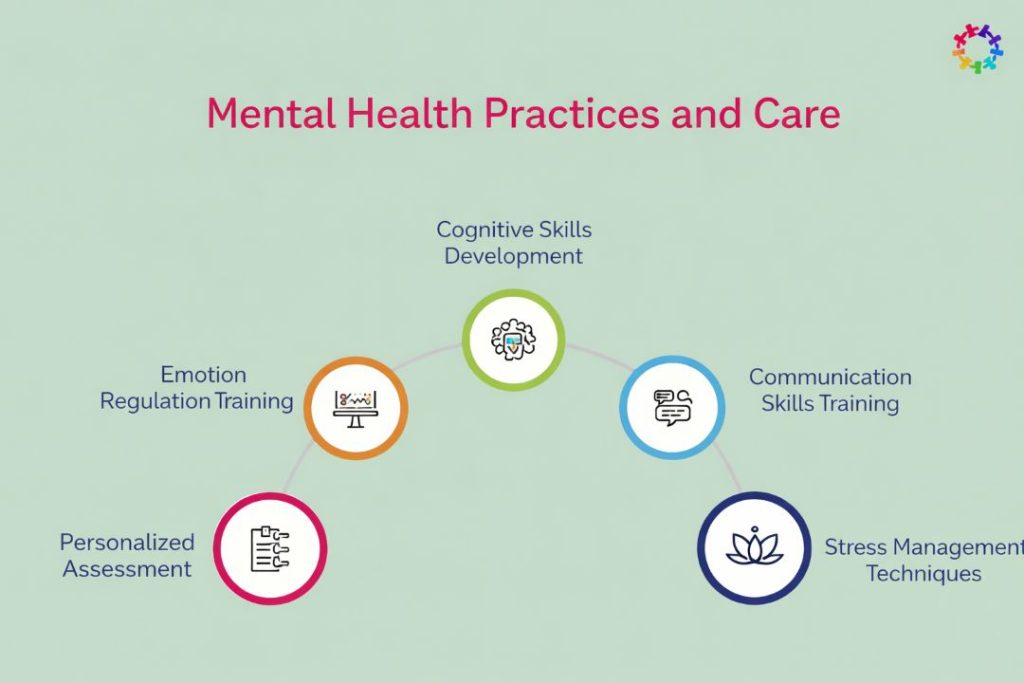
Some children and adolescents are assisted with the assistance of professionals, though the routine is mighty. The practices of Mental Health may also include psychiatric evaluation, care and medication administration.
Professional support can:
- Detailed emotional or behavioral problems.
- Provide stress-responding coping skills.
- Empower and educate to assist families.
- Anxiety disorders, depression, or ADHD or depression disorders.
Appropriate attention when young might eradicate the problems such that they would not get harder as they grow old.
Mental Health Practices and School Success
Learning directly is reliant on emotional well-being. The Mental Health practices help in concentration, memorizing, emotional regulation and behavior in the classroom.
The mentally healthy students are also characterized with the tendency to:
- Test anxiety: improved management
- Get their requirements with teachers.
- Establish good relationships with peers.
- Receive inspiration even when stressed in academics.
The practices that are interrelated between the schools and families are reinforced and practiced on a day-to-day basis.
When to Seek Professional Support
A person may be prepared to seek the services of a professional in case emotional or behavioral changes persist over a few weeks, disrupt the performance or relationships at school, or leave the person with an unpleasant experience. The best combination of practices in mental health is received when specialized care is accorded on the requirements of a young person.
We, at Orlando Premier Psychiatry, provide humane and developmentally oriented mental care services to children, teens and adolescents as we work closely with families that are associated with the process.
Take the Next Step Toward Better Mental Health
You are not obliged to feel compelled to assist your child/teen to overcome his emotional management. With the help of the appropriate Mental Health Practices and professional instructions, the desirable change will be introduced in the long-term perspective.
Contact Orlando Premium Psychiatry and reserve an appointment to an anonymous appointment and discover how our child and adolescent mental services might enhance the technique of your family gaining equilibrium and health.
Key Takeaways
- Mental Health Practices support emotional resilience in children, teens, and adolescents
- Simple, consistent habits are often more effective than complex interventions
- Family involvement strengthens long-term outcomes
- Professional support is valuable when emotional challenges interfere with daily life
- Early care helps build lifelong coping skills
Disclaimer
The information provided in this blog is intended for educational and informational purposes only and is not a substitute for professional medical, psychological, or psychiatric advice.
Frequently Asked Questions
What are some mental health practices?
Mental health practices include habits that support emotional balance, such as regular sleep, physical activity, mindfulness, open communication, and stress-management skills. For children and teens, these practices help build resilience, emotional awareness, and healthy coping strategies.
What are three good mental health practices?
Three effective mental health practices are maintaining consistent routines, encouraging emotional expression, and practicing relaxation techniques. These habits help children and adolescents manage stress, regulate emotions, and feel more secure in daily life.
What are 5 ways to improve mental health?
Five ways to improve mental health include getting adequate sleep, staying physically active, limiting screen time, building supportive relationships, and seeking professional help when needed. These approaches support emotional stability and overall well-being.
What is a mental health practice?
A mental health practice is a regular habit or strategy that supports emotional well-being. For youth, this may include routines, coping skills, mindfulness, or therapy that helps manage stress, emotions, and behavioral challenges.
What are the 7 C’s of mental health?
The 7 C’s often refer to competence, confidence, connection, character, contribution, coping, and control. Together, they describe key areas that support healthy emotional development in children and adolescents.
What is the 3-3-3 rule in mental health?
The 3-3-3 rule is a grounding technique for anxiety. It involves naming three things you see, three sounds you hear, and moving three parts of your body. This helps bring attention back to the present moment.