
The first step to learning about PTSD and OCD is to become aware that intrusive thoughts, uncomfortable feelings, avoidance patterns and repetitive actions to decrease anxiousness are all typical for both illnesses. As with other psychological illnesses, however, trauma can impact the onset as well as exacerbate symptoms of OCD, and some should be familiar with learning about some of the similarities and differences between the two illnesses and how they may influence them.
The potential connection between post-traumatic stress disorder (PTSD) and ocd is now clear: Mental health workers and researchers are increasingly affiliated with the thought. Both can be characterized by intrusive thoughts that are not wanted, raised anxiety levels, discomfort and behaviors that help to reduce the discomfort.
However, trauma experiences have been associated with an increased risk for the development of OCD symptoms and people with OCD have been found to have symptom patterns similar to those with trauma. Awareness of the similarities and differences can facilitate people to obtain support for their emotional well-being, symptomology and the effects on their relationships, work and life.
Key Takeaways
- Intrusive thoughts and avoidant behaviors are some of the common similarities between PTSD and OCD symptoms.
- Obsessive-compulsive symptoms may be influenced by trauma, which can lead to an onset or exacerbation of OCS.
- Research indicates that for some it may be a huge overlap between PTSD and OCD (Obsessive-Compulsive Disorder).
- In both diseases, emotional wellness, sleep, and relationships may be impacted and work performance may decline.
- The two share similarities, but it is crucial to correctly diagnose the signs as PTSD and OCD are two different disorders.
- Early interventions in mental health can have a positive effect on longterm outcomes and quality of life.
A professional psychiatrist can assist people in recognizing symptom patterns and choices.
What is PTSD?
Post-traumatic stress disorder (PTSD) is a mental disorder which can follow a traumatic incident or event. These may result from an accident, military combat, abuse, violence, natural disaster or other life-threatening experience.
Common symptoms of PTSD can be:
- Intrusive memories
- Nightmares
- Emotional distress
- Hypervigilance
- Difficulty sleeping
- Refusal of reminders of the trauma.
- Changes in mood and thinking, which are negative.
These symptoms will persist for some period of time if not correctly dealt with, which may be months or years.
What is OCD?
Obsessive-compulsive disorder (OCD) is characterized by recurrent obsessions or recurrent compulsions (or both).
Obsessions may include:
- Unwanted intrusive thoughts
- Fears of contamination
- Concerns about safety
- Excessive doubts
- Disturbing mental images
Compulsions may include:
- Repetitive checking
- Counting rituals
- Excessive cleaning
- Reassurance seeking
Once more, redoing the same until they feel “right.”
People with OCD typically know that their thoughts don’t make sense, but they feel a lot of anxiety and feel compelled to repeat the behavior.
The Connection Between Post-Traumatic Stress Disorder and OCD
Through the publication of research through the National Center for Biotechnology Information (NCBI), scientists are now aware of OCD and post-traumatic stress disorder. Studies show that trauma can be an important factor and encourage the development of OCD in some people.
PTSD and OCD are two different disorders, but they can occur together and sometimes may share the same psychological processes.
This overlap of emotions related to the OCD thoughts and/or behaviors is often referred to by some professionals as “OCD symptoms of trauma.
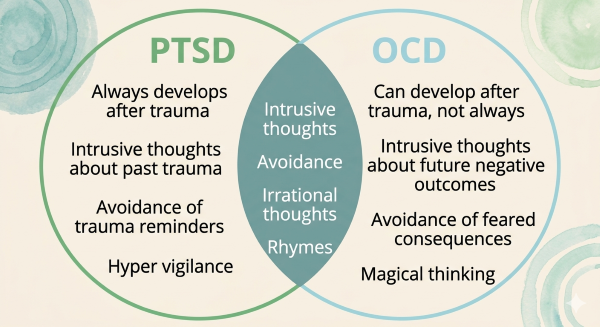
Why Do PTSD and OCD Share Similar Symptoms?
One complicating factor to the relation between posttraumatic stress disorder (PTSD) and ocd is the fact that unwanted intrusive experiences are an aspect in both disorders, from the standpoint of both.
For example:
PTSD | OCD |
Intrusive trauma memories | Intrusive obsessive thoughts |
Avoidance of trauma reminders | Avoidance of obsession triggers |
Hypervigilance | Excessive monitoring and checking |
Emotional distress | Anxiety and distress |
Safety behaviors | Compulsive rituals |
As the symptoms are similar, they may be caused by different factors.
Typically, there is an underlying fear and anxiety that triggers the onset of OCD symptoms, and symptoms of PTSD are triggered by traumatic life circumstances.
How Trauma Can Influence OCD Symptoms
Research shows that trauma can play a role in things like obsessions and the severity of these obsessions.
Examples include:
- A victim of a motor vehicle accident who continually reviews motor vehicle safety.
- One who is an ex-victim of violence and obsessive-compulsive disorder.
- If a person who suffered “trauma” (in his illness) also has contamination issues.
- In this way, the traumatic experiences can lead the mind to be chaotic and to create the “obsessive thought patterns.”
The key to understanding how post-traumatic stress is related to ocd, seen in many mental health facilities, is such a relationship.
Shared Brain and Emotional Processes
Studies of these diseases are continuing, but a variety of mechanisms has been seen, all of which share some degree of commonality.
These may include:
- Heightened threat perception
- Increased anxiety sensitivity
- Emotional dysregulation
- Difficulty tolerating uncertainty
- Persistent fear responses
People suffering from both disorders may have a vicious cycle of fear, avoidance and repetitive behaviors that will decrease their distress temporarily but support the long-term disorder symptoms.
Signs That PTSD and OCD May Be Occurring Together
Some signs and symptoms are closely related, and it can be challenging to identify multiple co-occurring signs and symptoms.
Common signs include:
- If a person continues to perform an activity that is linked to their traumatic fears.
- Persistent, intrusive and distressing thoughts.
- Avoidance of situations encountered with trauma and anxiety
- Difficulty concentrating
- Sleep disturbances
- Emotional numbness
- Constant reassurance-seeking
- Increased irritability
It’s only when the signs and symptoms start to overlap and affect their day-to-day living that the connection between post-traumatic stress disorder and ocd becomes more obvious.
Impact on Daily Life
If both PTSD and OCD symptoms co-occur and impact several areas of life, it might be due to having both of these disorders.
Emotional Impact
Individuals may experience:
- Chronic anxiety
- Fear
- Guilt
- Shame
- Emotional exhaustion
Relationship Challenges
Symptoms can affect:
- Communication
- Trust
- Family dynamics
- Social engagement
Workplace Difficulties
Individuals might have difficulties with:
- Productivity
- Focus
- Attendance
- Decision-making
It can be useful to be aware of these to gain a perspective on why early help can be useful.
Risk Factors for Developing Both Conditions
There could potentially be several vulnerabilities.
These include:
- Childhood trauma
- Physical abuse
- Emotional abuse
- Exposure to violence
- A history of anxiety disorders in the family.
- Past mental health problems
- Repeated traumatic experiences
Not everyone who has had a trauma develops OCD; however, but studies conducted indicate that a great deal of trauma can be a factor for some individuals.
Common Misconceptions
Myth #1: PTSD is the same thing as OCD.
They are alike in some aspects and yet each is a unique diagnosis with different aspects.
Myth #2: Trauma Must Always Prompt OCD.
While trauma can be a factor in OCD symptoms, many who suffer from OCD never even had a trauma.
Myth 3: If you have thought intrusions, then you must desire to act out on the thoughts.
The majority of intrusive thoughts are not desired and do not align with the values and plan.
What these facts do is help to destigmatize and encourage people to seek support.

When to Seek Professional Help
If intrusive thoughts and repetitive behaviors, trauma or anxiety begin to become disruptive to everyday life, maybe a hand from professionals in the mental health field could help.
Warning signs include:
- Persistent distress
- Sleep disruption
- Relationship difficulties
- Difficulty maintaining responsibilities
- Emotional overwhelm
If caught and offered guidance in the early stages, children will not become more disruptive over time.
Need Support?
If you have intrusive thoughts, anxiety, trauma issues, or obsessive behaviors, or a loved one of yours is suffering from such issues, contact Orlando Premier Psychiatry today (407) 565-3546 for a confidential consultation.
We at Orlando Premier Psychiatry Can Help you.
Understanding the correlation between PTSD and ocd can help to better realize how and why these two can go together: intrusive thoughts and anxiety, avoidance, and repetitive behavior.
It can be debilitating to live with PTSD, OCD, anxiety or trauma symptoms, particularly if they start to impact your life. Compassionate and personalized, Orlando Primary Psychiatry’s psychiatric services play a crucial role in recognizing mental health symptoms and making the right steps toward emotional wellness lasting.
Frequently Asked Questions
Can trauma cause OCD?
Trauma does not directly cause OCD in every case, but research suggests traumatic experiences may increase vulnerability to obsessive-compulsive symptoms. Trauma can influence thought patterns, fears, and behaviors that resemble or contribute to OCD-related challenges.
How are PTSD and OCD different?
PTSD primarily develops after traumatic experiences and involves trauma-related memories and avoidance. OCD centers on intrusive obsessions and compulsions that reduce anxiety. Although symptoms overlap, the underlying causes and symptom patterns differ significantly.
Can someone have PTSD and OCD at the same time?
Yes. Research indicates that PTSD and OCD can occur together. Individuals with both conditions may experience intrusive thoughts, avoidance behaviors, heightened anxiety, and repetitive actions that significantly affect daily functioning and emotional well-being.
Are intrusive thoughts in PTSD the same as OCD?
Not exactly. PTSD intrusive thoughts are usually connected to traumatic memories or experiences. OCD intrusive thoughts often involve feared outcomes, doubts, or unwanted images that trigger compulsive behaviors intended to reduce anxiety.
When should someone seek help for PTSD or OCD symptoms?
Professional support is recommended when symptoms interfere with relationships, work, sleep, emotional health, or daily responsibilities. Early intervention can help individuals better understand symptoms and develop healthier coping strategies over time.
Disclaimer
This blog is intended for educational and informational purposes only and should not be considered medical advice, diagnosis, or individualized mental health guidance. Always consult a qualified healthcare professional regarding mental health concerns, symptoms, or healthcare decisions.
References
- National Center for Biotechnology Information (NCBI). Exploring PTSD and OCD Comorbidity. Available at: https://pmc.ncbi.nlm.nih.gov/articles/PMC8301733/
- National Institute of Mental Health (NIMH). Obsessive-Compulsive Disorder.
- National Institute of Mental Health (NIMH). Post-Traumatic Stress Disorder.
- American Psychiatric Association. Diagnostic Information on PTSD and OCD.