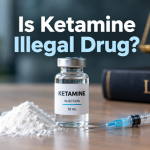
For this reason, Ketamine has been a subject of much discussion lately due to its increasing use in mental health treatment. Many people wonder whether ketamine is a controlled substance or if it’s legal to use for depression, anxiety or other things. Yes, it can be done! Why is ketamine a controlled substance is important because it’s a Schedule III drug in the United States. This means that it is accepted for medical purposes, but is subject to careful regulation as it could be misused. We know that when it comes to mental health treatment, patients need to make informed decisions and we want to help them understand how ketamine works. We believe that gaining awareness of the regulation of ketamine helps patients make informed decisions about their mental health.
Key Takeaways
- Is Ketamine a controlled substance or not? Yes. Ketamine is a controlled substance under the federal government of the United States, and is classified as a Schedule III drug.
- There are legitimate medical uses for Ketamine, including general anaesthetic and some mental health illnesses.
- As long as it is medically necessary, it is legal for the healthcare worker to prescribe Ketamine.
- Ketamine is closely supervised and controlled because of its potential for abuse.
- Use of Ketamine only with a trained health professional.
- Avoid buying and using ketamine from illegal sources.
What is Ketamine?
Ketamine is an anesthetic that was first developed. It has been safely used for decades in ER and hospitals, it works quickly and relieves pain while producing anaesthetic effect.
Ketamine is now being investigated and used for some mental health disorders, particularly where other medications haven’t been effective in providing relief.Scientists continue to learn more about how ketamine affects the brain and why it could be beneficial to some people’s symptoms.
Even with the medical benefits of ketamine, there is a question of whether or not ketamine is a controlled substance due to its recreational use. The medical value and abuse potential is the reason for government regulation.
How Ketamine Was Originally Developed
Ketamine was first developed in the 1960s as a more desirable alternative to previous anesthetic drugs. A drug was being sought which was capable of reliably inducing anaesthetic activity without creating a stable state of breathing and cardiovascular activity.
Ketamine was first approved for use by the U.S. Food and Drug Administration (FDA) in 1970. Since then it has been widely used in:
- Emergency medicine
- Surgery
- Veterinary medicine
- Pain management
- Certain psychiatric applications
Evidence over time showed that some patients improved their depression symptoms from ketamine, thus further research into the use of ketamine in mental health was conducted.
Is Ketamine a Controlled Substance?
Yes. Is ketamine illegal? The answer is yes.
In the U.S., Ketamine is classified as a Schedule III controlled drug under the Controlled Substances Act.
This classification means:
- It has been adopted within the medical profession.
- Prescribed by only licensed health care providers.
- Its distribution is under control.
- Documents are required to be kept.
- The law has caps on refills.
- Unauthorized possession or distribution could result in criminal penalties.
The question many patients are asking is, “Is ketamine a controlled substance?” Many patients want to know that if they get their ketamine from a licensed medical provider, it is legal and monitored.
Why is Ketamine Classified as a Controlled Substance?
There are two important characteristics that make Ketamine a regulated drug.
First of all, it’s a medical misuse of some popular medical uses.
Secondly, it’s simple to be overusing and addicted to it.
Some may use ketamine recreationally because of the way it alters perceptions, may induce hallucinations and/or may cause a sense of detachment from reality. These effects place people at a higher risk of being abused in environments other than the doctor’s office.
The Drug Enforcement Administration (DEA) suggested that ketamine still be available for proper medical use, but put restrictions on prescribing and dispensing.
Appropriate care and prevention of the illegal use by matching this balance.
What Schedule is Ketamine Under?
The DEA has made ketamine a schedule III controlled substance.
Schedule III medications:
- Have accepted medical uses.
- Not as high a risk of physical dependence as schedule I or II drugs
- May be psychologically addictive.
- Require licensed prescribing
- Must abide by federal and state legislation
Drugs include some painkillers, testosterone products and drugs containing the tranquilizer ketamine and are part of Schedule III drugs.
The classification is due to the therapeutic application of ketamine, but supervised use.
Why is Ketamine Regulated?
Many people ask, why is ketamine a controlled substance when they’ve heard of the medical and illegal use of the drug?
Patients are protected through regulation, which guarantees that:
- Proper diagnosis
- Appropriate dosing
- Medical monitoring
- Safe storage
- Controlled dispensing
- Reduced diversion
Without regulation, ketamine misuse could increase risks such as:
- Addiction
- Memory problems
- Impaired judgment
- Dangerous accidents
- Repeated use of the bladder, leading to complications with the bladder.
- Psychological distress
The intent of the rule is not to prevent people from using drugs, but to make sure that people use them safely and responsibly.
When Ketamine Can Be Prescribed Legally
Ketamine can be legally prescribed by a health care provider if it is medically necessary.
Ketamine can be used in the clinic to:
- Anesthesia
- Pain management
- Certain psychiatric conditions
- Ketamine has been a recent buzzword in the treatment-resistant depression (T-RD) treatment field.
- Medical exemptions (except for above).
Please note, Ketamine should NOT be purchased from unlicensed health care practitioners or pharmacies, or from unknown health care providers.
Patients are not to purchase or sell online ketamine from any vendors, or any unauthorized sources, because the product could be unsafe or illegal.
Legal Consequences of Illegal Possession or Distribution
Ketamine is a controlled substance and possession or distribution of this substance may be subject to severe legal consequences.
Violations of the law can be punishable by any of the following penalties:
- Criminal charges
- Fines
- Probation
- Imprisonment
- Professional licensing consequences
- Permanent criminal records
The impact of the sanctions will depend on the value of the currency, purpose, and if there are any previous crimes and in-country laws.
If you have any questions about the use of ketamine, consult a qualified health care professional or legal expert; not social media.
How is Ketamine Used in Mental Health Care?
Ketamine has garnered interest in mental health care over the last 20 years.
Some people may see symptom improvement even sooner with the careful supervision of a medical practitioner when taking Ketamine than some of the more traditional antidepressant medications which can take several weeks to show symptom improvement.
Scientists are still investigating the use of Ketamine in the following medical areas:
- Major depressive disorder
- Treatment-resistant depression
- In a crisis situation, thoughts of suicide, anxious, frightened, and overwhelmed may occur.
- Certain anxiety disorders
- Post traumatic stress disorder (PTSD)
The decision to use ketamine for mental health treatment is made with great care, taking into account an individual’s medical history, medications, and overall health.
Looking for Professional Psychiatric Care?
The depression and mental health team at Orlando Premier Psychiatry offers detailed psychiatric assessments, medication management, and personalized treatment plans if you are considering treatment for depression or other mental health issues. We can ensure you know all of your options, and feel confident enough to make an informed decision.
Call today and schedule an appointment with our highly trained psychiatric staff to talk with them about your mental health objectives.
Ketamine for Depression
One reason that’s why people ask, is ketamine a controlled substance, is that people are using it more and more to treat depression.
If a person has not responded to a couple of common antidepressant drugs, this can be used.
The impact on a chemical in the brain called glutamate in animal studies suggest that ketamine affects learning, memory and brain connections. This does not work on serotonin like many traditional antidepressants, but also affects other chemicals.
Especially for use in adults with treatment-resistant depression with an oral antidepressant, the FDA has also approved a new nasal spray formulation of ketamine.
Ketamine doesn’t work for everybody. Any treatment decisions should always be made on a case-by-case basis with the help of a qualified psychiatric provider.
Safety Considerations Before Using Ketamine
As always, safety should be the top priority.
Typically, the following points are considered before giving ketamine:
- Medical history
- Current medications
- Heart health
- Blood pressure
- Substance use history
- Mental health diagnosis
Possible side effects may include:
- Dizziness
- Nausea
- Increased blood pressure
- Sleepiness
- Blurred vision
- Dissociation
- Temporary confusion
Most side effects are temporary, and happen while taking or immediately after treatment.
Ketamine should not be used by patients as they are not allowed to drive or use machinery until it is safe for them to do so.
Don’t use ketamine for self-medication.

Why Choosing a Qualified Psychiatry Provider Matters
In addition to whether or not ketamine is considered a controlled substance, one must ask who should be responsible for the management of ketamine?
A qualified psychiatric provider can:
- Know the indications for ketamine.
- Monitor your response
- Consider side effects
- Modify the care plan
- Continue psychological treatment
You will find that you are safe not to mention that you will be receiving more customised treatment based on your needs and not on what you see online or what is in vogue.
Take the Next Step Toward Better Mental Health
Knowing that ketamine is a controlled substance, you’ll be better informed and make safer healthcare decisions. Ketamine is a controlled substance, but can be used as a valuable antidepressant when administered properly.
If you feel depressed or have any other mental health issues and are seeking information on what you can do, Orlando Premier Psychiatry is here to assist you. Compassionate psychiatric assessments, medication management and individual psychiatric care are provided by our highly trained psychiatric staff.
Call Orlando Premier Psychiatry now to make an appointment and talk with them about your options if you are interested in exploring ketamine or another evidence-based treatment.
Frequently Asked Questions
Is ketamine a controlled substance in the United States?
Yes. Ketamine is a federally controlled substance (Schedule III) in the United States. It is known to have medical applications, but is controlled because of its abuse and addiction potential.
Why is ketamine considered a controlled substance?
Ketamine is regulated because it has medical uses and has the potential for abuse. Federal regulations assist in guaranteeing that it is prescribed, stored and administered safely by licensed health care practitioners.
Can doctors legally prescribe ketamine?
Yes. Healthcare providers can legally administer or prescribe ketamine for medical reasons, and as per Federal and State laws. Treatment is determined by patient’s clinical condition and medical history.
Is ketamine the same as esketamine?
No. Esketamine is not a structurally similar drug, but is related to ketamine. It can be given as a nasal spray for a few adults with treatment-refractory depression that has been FDA-approved and is given through a program called Risk Evaluation and Mitigation Strategy (REMS).
Can you be arrested for possessing ketamine without a prescription?
Yes. Ketamine may be subject to federal and state laws which could lead to criminal charges for unauthorized possession or illegal distribution. The impact of the legal situation depends on the specific context and where it is located.
Disclaimer
The information provided in this article is for educational purposes only, and is not intended as medical or legal advice. It is not a substitute for a licensed health care provider’s evaluation. Please seek out a qualified psychiatric professional if you have questions about ketamine, your prescription medication or mental health. For legal inquiries about controlled substances, consult a licensed attorney that is knowledgeable about your jurisdiction.
References
- U.S. Drug Enforcement Administration (DEA). Controlled Substances Act and Drug Scheduling.
https://www.dea.gov/drug-information/drug-scheduling - U.S. Food and Drug Administration (FDA). Spravato (Esketamine) Information.
https://www.fda.gov - National Institute of Mental Health (NIMH). Depression.
https://www.nimh.nih.gov/health/topics/depression - National Institute on Drug Abuse (NIDA). Ketamine DrugFacts.
https://nida.nih.gov - American Psychiatric Association. Practice Guidelines and Mental Health Resources.
https://www.psychiatry.org