Depression can impact sleep, energy, relationships, and enjoying everyday activities. If anyone is looking to try something new, it is crucial to know the oral dosage of ketamine for depression. For depression that is not responding to other treatments, oral ketamine is sometimes considered, and the therapeutic dose, efficacy and safety may vary from person to person. No single dose is right for all people and ketamine should NOT be self-prescribed to treat depression.
At Orlando Premier Psychiatry, we feel that it is important to provide patients with clear information so that they can make decisions on their mental health. This guide provides an explanation of the mechanism of action of oral Ketamine, factors that can affect dosage, potential side effects, and when to consult a psychiatrist.
Key Takeaways
- The dose of oral ketamine that is best for a depressed person is not universal.
- The oral ketamine is not the FDA-approved esketamine nasal spray.
- Oral ketamine has not been studied as extensively as other treatments for depression, and evidence of its effectiveness is still thin.
- Dose is dependent on individual, other medications, and route of administration.
- Ketamine may be sedative, dizzying, dissociative, and have other negative effects.
- There are potential risks, misuse and unknown long-term effects, so medical supervision is required.
What is Oral Ketamine?
Ketamine is a drug which acts on the glutamate system of the brain, a system involved in intercellular communication. It has been used as an anaesthetic and been investigated for its antidepressant properties.
For a specific use, oral ketamine may be administered via mouth, usually when compounded. It can be talked about with those who suffer from chronic depression that have not gotten as much relief as they should from other treatment methods.
But oral ketamine cannot be substituted for all other types of ketamine. Absorption depends on the route, formulation and individual. A dose given at one time is not another time that is safe for the same dose to be given.
What is the Oral Ketamine Dose for Depression?
No universally accepted, standard oral ketamine dose for depression has been determined. However, there is not enough evidence to suggest a standard dose for all and oral doses of ketamine differ between research studies and clinical settings.
It is important for a qualified prescribing professional to take into account the person’s health history, symptoms, their previous reaction to drugs and the type of formulation that is being given.
The oral administration of ketamine for the treatment of depression might also vary from IV ketamine or anesthesia doses. The absorption pattern of these forms vary and so do have varying degrees of evidence. It is risky to use a dosage you found online or on a prescription from someone else or read about in a research paper.
Why Does Oral Ketamine Dosing Vary?
There are a few considerations that may affect a prescriber’s choice:
- Medical conditions: Medical conditions may impact the appropriateness of ketamine use.
- Medications: Certain medications may enhance sedation or pose other safety issues with ketamine.
- Formulation: Some oral products may be compounded differently and/or higher or lower in strength.
- Benefits and side effects of previous medications or ketamine exposure may be indicative of an assessment.
- Monitoring requirements: The ongoing decisions may be affected by changes in alertness, blood pressure, mood and other symptoms.
Never take additional doses, repeat doses or alter a dose without the direction of the healthcare professional who is supervising your treatment.
Is Oral Ketamine FDA-Approved for Depression?
Oral ketamine is not FDA approved as a treatment for depression. In some cases, prescribers might consider using a medicine for other indications than those listed on the label, but before taking such action they must carefully consider the evidence for the extended use, discuss the findings with the patient, and put in place precautions for its safe use.
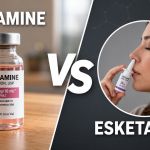
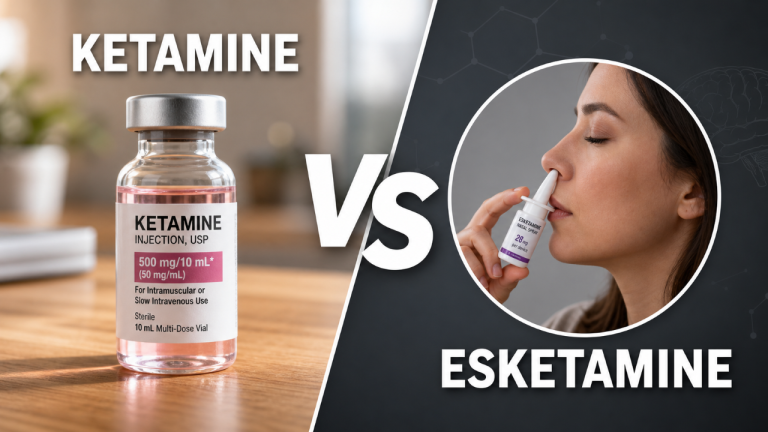
Note that oral ketamine is not the same as esketamine nasal spray, which has been approved for certain indications in adults for depression. There are unique eligibility criteria and safety measures for using Esketamine.
The FDA has also cautioned about the compounded ketamine products used for psychiatric treatment and risks associated with this treatment, especially when administered outside a controlled environment. Compounded products are not FDA-approved as finished drugs and may not be as good, absorb into the body or be safe.
Please refer to FDA’s compounded ketamine information for current information.
How Does Ketamine Affect Depression?
Numerous of the most typical antidepressant drugs influence serotonin, norepinephrine or other chemical messengers. Ketamine has other effects, mainly on the glutamate system of the brain.
Scientists are investigating if these are helpful in altering communication between cells in the brain associated with mood and emotional regulation. However, some individuals with specific types of ketamine experience signs of improvement in depression symptoms within hours or days.
The results of this study are not meant to be a validation of the efficacy of oral ketamine in all patients. The more popular studies are on IV ketamine, or the FDA-approved version esketamine, not oral ketamine.
The strength of the evidence, the long-term benefits, and the most appropriate way of long-term symptom management is still a large considerations.
How Long Does Oral Ketamine Take to Work?
When to respond is dependent on the formulation, dosage, person’s biology and what symptoms are being evaluated. There is some research on ketamine that showed relatively quick changes in depression symptoms, but it is not certain that the results of one administration will be predictive of the results of oral ketamine.
There may be no effect or the person may feel better or feel worse. A rapid change in mood also does not necessarily mean that improvement will last.
A trained person can determine whether a reported change is significant and if additional evaluation is required. Avoid taking extra ketamine because you haven’t seen any immediate effect.
Oral Ketamine vs. Ketamine Infusion
There are differences between the two types of ketamine – oral and infusion – regarding the route of administration, the amount of drug that enters the bloodstream, and who will supervise the administration.
Oral ketamine
- Ingested (by mouth) in a prescribed form.
- There are different rates of absorption among individuals and products.
- There is less research on its use for depression.
- Safety and dosing vary with formulation and individual evaluation.
Ketamine infusion
- Administered intravenously in a controlled area.
- Gives greater control over the administration of the drug.
- Has been researched for depression including inadequate response to other treatments.
- Needs evaluation and monitoring for possible negative impacts.
Both of these are not a universal fit for every individual. Before making a decision, a professional should share the evidence, any potential risks, the cost, and the options.
What Are the Side Effects of Oral Ketamine?
Side effects of ketamine can be physical or mental, even when used in a professionals’ care setting. Possible side effects are:
- Dizziness or lightheadedness
- Nausea or vomiting
- Feeling drowsy and less alert.
- Any changes in BP or HR
- Difficulty seeing straight or coordinating the movements of the body.
- Dissociation – feeling disconnected from your body, and the world.
- Fright, bewilderment, strange visions
The intensity and duration of these effects vary. Some risks may be heightened by alcohol, sedatives, opioids and other drugs that impact the central nervous system.
There are also reports of urinary tract and bladder issues, and the potential for cognitive impacts and addiction after repeated or long-term use of ketamine. Anyone who has urinary pain, blood in the urine, severe levels of confusion, or any other symptoms of concern should seek immediate medical advice.
If breathing is severely impaired, collapse, unresponsiveness, or there is an immediate danger of self harm, emergency assistance is needed.
Can You Take Oral Ketamine at Home?
There are some arrangements for using ketamine that allow for its prescription in places other than a medical facility, but there are still risks if you take it at home. Use of this product at home should be reserved for use when a qualified prescriber has established that it is appropriate and have made arrangements for its use and monitoring.
Do not use ketamine from an unverified online source, share a prescription or use recreational ketamine for depression.
If a prescriber prescribes for use at home, use the instructions provided. Do not drive, work with machinery, drink alcohol or combine ketamine with any sedating substances unless such risks have been discussed by a qualified professional. Have support arranged where needed, according to prescriber’s orders.
A special plan may be required for individuals with specific medical conditions, a history of substance abuse, other risk factors.
Who Might Be Considered for Ketamine-Based Psychiatric Care?
For some adults with chronic or refractory depression who have not responded to other treatments, ketamine can be discussed. But eligibility is based upon a detailed assessment, not just the diagnosis.
The psychiatric evaluation may take into account the following:
- The duration of depressive symptoms and the impact on living.
- Medications and other treatment methods that have been used in the past.
- Prescribed medications, supplements, alcohol and drug use
- Anecdotal information and any possible side effects.
- Symptoms of bipolar disorder, psychosis or other condition that could alter the risk assessment
- The options that an individual has for meeting his/her objectives as well as his/her tastes and choices.
Ketamine isn’t a panacea and should not be used as a substitute for a comprehensive treatment plan for depression without appropriate support from a professional.
What Should You Ask Before Starting Oral Ketamine?
If you are thinking about taking oral Ketamine, check with the prescribing healthcare practitioner first:
- What are the reasons why this might be a good choice for me?
- How can this be used to validate the formulation of depression?
- Which benefits can be realistically expected, and what will be measured is progress?
- What are the most significant side effects or interactions for me?
- What monitoring and follow-up will there be?
- So what if I have side effects that I don’t want?
- What options are there and what implications do they have?
- How much will it cost and will insurance pay for it?
Here are some questions to consider and get more understanding about this decision beyond a dose.

Exploring Ketamine Options in Orlando, Florida
The first step in selecting a psychiatric approach is to learn more about your symptoms, health history and treatment goals. When looking at the ketamine dose for depression, it is important to consider evidence-based dosing information rather than relying on one you’ve seen online.
Orlando Premier Psychiatry provides psychiatric care to individuals who are looking for personal advice on mental health issues. A psychiatric evaluation may help you understand what options are available for you if you are looking for the psychiatry near me, psychiatry Orlando, psychiatry Orlando FL or psychiatry in Orlando.
Looking for more information on the possibilities? Call Orlando Premier Psychiatry at (407) 565-3546 to find out what psychiatric services are available and to schedule an appointment. Our team will be able to answer any questions you have regarding ketamine infusion, ketamine infusion Orlando, ketamine infusion Orlando FL and ketamine infusion near me.
Final Thoughts
Oral ketamine dose for depression is more than just a number. The formulation, route, personal health factors, possible interactions and body of evidence are all relevant.
Don’t self-medicate or take medicines from an unknown source. It is important to consider and assess the evidence, the potential risks and the alternatives available in your specific situation and this can be done by a qualified psychiatric professional.
If you are troubled by depression and its impact on your life, Orlando Premier Psychiatry can discuss the options for psychiatric care in Orlando, FL.
Please call (407) 565-3546 to find out about psychiatric services available.
Frequently Asked Questions
1. What is the usual oral ketamine dose for depression?
The oral dose of ketamine for treating depression is not standardized. Dosage is different among studies and formulations. The decision to try this should be made by a qualified prescriber and the patient’s benefits and risks discussed.
2. How quickly can oral ketamine improve depression symptoms?
Response times vary. Some studies indicate improvements can take days or weeks, but patient responses to small studies are not necessarily representative of patient responses to the overall study. Oral ketamine may not be effective for everyone and may not work for the long term.
3. Is oral ketamine safer than ketamine infusion?
Not all roads are safer for everybody. Oral absorption varies and infusions are more controllable. Both can be detrimental, and it will need a professional evaluation to determine which one is the best choice and to monitor the situation.
4. Can I take oral ketamine with antidepressants?
Certain medications can be administered with ketamine under medical supervision; however, the interaction and side effects will vary based on the medications prescribed. Your prescriber will need to know all your medicines before you think about using ketamine.
5. Is oral ketamine approved by the FDA for depression?
NO, Oral Ketamine is not a specifically FDA-approved drug for depression. When using compounded oral products for off-label purposes, caution must be taken regarding the risks, benefits, and evidence.
Medical Disclaimer
The information provided is for education purposes only and is not a medical interpretation. Does not replace the evaluation of a trained health care provider. Do not begin, discontinue, or alter the dosage of medications without the proper professional advice. If you are having a mental health crisis, or you feel you are in immediate danger of hurting yourself, call the emergency services.
References
- U.S. Food and Drug Administration (FDA): Compounding Risk Alerts — information about potential risks associated with compounded ketamine products.
- National Institute of Mental Health (NIMH): Depression — an overview of depression, available approaches, and ongoing research.
- Journal of Affective Disorders: An Update on the Efficacy and Tolerability of Oral Ketamine for Major Depression — a systematic review examining oral ketamine research and its limitations.
- PubMed: Oral Ketamine for Depression: An Updated Systematic Review — a review of research on oral ketamine and related medications for depressive disorders.
- PubMed: Short-Term Effects of Oral Ketamine for Depression: A Systematic Review and Meta-Analysis of Randomized Controlled Trials — a 2026 review of short-term evidence, highlighting the need for further research into optimal dosing and long-term safety.