
Ketamine bladder symptoms may impact the urinary system particularly when using ketamine repeatedly or heavily. Symptoms that are common are urinating more frequently, having an urgent need to urinate, pain with urination, bladder pain and blood in the urine. Recognizing these warning signs can encourage persons to get proper help at an early stage.
Ketamine has valid medical indications such as psychiatric care in a controlled setting. But research has also shown that chronic recreational use of ketamine can cause urinary tract and bladder issues. Risk may differ depending on the frequency, amount, length of use and the individual.
Do not ignore new urinary symptoms while taking ketamine. A health care provider may be able to identify if ketamine was used or if another issue related to the urine is causing your symptoms.
Key Takeaways
- You may experience urinary frequency, urgency, pain, burning, blood in the urine or lower abdominal or bladder discomfort from ketamine bladder symptoms.
- Chronic and/or high doses of ketamine have been linked to inflammation/damage to the bladder and urinary tract.
- Symptoms can occur after months or years of repeated use or it may vary.
- In severe urinary disease there may be involvement of the upper urinary tract and kidneys.
- If you stop using ketamine, early urinary symptoms can improve, though in severe instances, it may not clear up.
- If urinary symptoms develop or get worse, they should receive medical attention, especially if the urine contains blood, if it is very painful to urinate, or if there is a change in urination.
What Are Ketamine Bladder Symptoms?
Ketamine bladder symptoms refers to any urinary issues caused by exposure to the drug ketamine. Urine is kept in a bladder until it is excreted. Ketamine and its metabolites can cause irritation to the bladder wall and help to trigger inflammation and other alterations.
Symptoms of the research have included bloody urine, bladder pain, urinary leakage, nighttime urination, urgency, frequency and painful urination.
The term ketamine-related bladder problems is typically used when repeated use of ketamine has occurred in a person and other common causes have also been ruled out.
It is important to be aware that not all UT symptoms are associated with ketamine. Similar symptoms can be caused by other conditions, such as urinary tract infections, kidney stones, prostate disorders, dehydration, and more.
What Causes Ketamine-Related Bladder Problems?
Ketamine bladder symptoms are thought to be caused by several factors.
Once ketamine is absorbed into the body it converts to a number of compounds. Other metabolites are excreted in the urinary tract. Repeated exposure is thought to cause irritation of the lining of the bladder and may impact the bladder barrier.
Exposure over a long period of time has been linked to scarring, sensitivity, changes in bladder capacity, and inflammation. In severe cases, the kidneys may become enlarged and the ureters may become narrowed.
This process is currently under investigation. It does not seem to be a single risk factor which determines the risk either. It could be the frequency, the amount, the length or it could be an individual’s health.
In 2025, a systematic review of published studies on the use of ketamine for psychiatric disorders identified some patients who experienced urinary symptoms, with most of the studies reporting mild to moderate symptoms and important limitations, such as the lack of long term follow-up.
What Are the Common Ketamine Bladder Symptoms?
Bladder symptoms that are reported most often are related to urination: how often, how urgently, or how comfortable the person feels when he or she goes to the bathroom to urinate.
Common signs include:
- Needing to urinate much more often
- A sudden or hard to control need to urinate.
- Dysuria (burning or pain while urinating)
- Deciding to urinate multiple times during the night.Multiple nighttime urination (polyuria)
- Pain or pressure in the lower abdomen
- Dysuria or increasing pain with urine dribbling up with a full bladder.
- Urinary leakage
- Blood in the urine
- Difficulty holding urine
- A sense that bladder does not empty normally.
Others experience pain, but not necessarily with a sharpness that indicates a fracture. Some people will discover they have to urinate frequently and only a little at a time.
Repeated non-medical ketamine use has been found to include frequency, urgency, painful urination and blood in the urine as among the most common urinary complaints.
How Long Do Ketamine Bladder Symptoms Last?
Ketamine bladder symptoms last for different amounts of time. Symptoms can get better following a period of no ketamine use, with mild symptoms potentially improving after use has ceased, especially if urinary symptoms are caught early. However, there may be more severe bladder or urinary tract damage that remains.
Studies have reported persisted symptoms or onset of symptoms after previous use of ketamine.
No one can predict the time it will take. Some people improve rather rapidly, but others may require continuous reassessment because inflammation or scarring may take more time to resolve as well as reduced bladder capacity and/or upper urinary tract changes.
That is why, sometimes, it is not the best thing to do to wait until the symptoms go away. If there is any ongoing change in the urine, it should be evaluated.
Who is Most at Risk of Ketamine-Related Bladder Problems?
Risks for ketamine bladder symptoms seem to be increased if a person uses ketamine more than once or takes it heavily.
Frequent, chronic or heavy use of non-medical drugs has most commonly been reported to be linked to serious urinary issues. The amount or length of time isn’t a clear cut thing that has been proven to cause bladder issues.
Individuals who have had issues with their urinary or kidney system also may require extra precautions. The use of ketamine with other drugs can make it even more complicated.
It is equally important to recognize that prescribed ketamine use is not as likely to be associated with urinary risks as heavy recreational use. The 2025 systematic review revealed that urinary damage in psychiatric ketamine was few and far between, and that many studies lacked long-term follow-up.
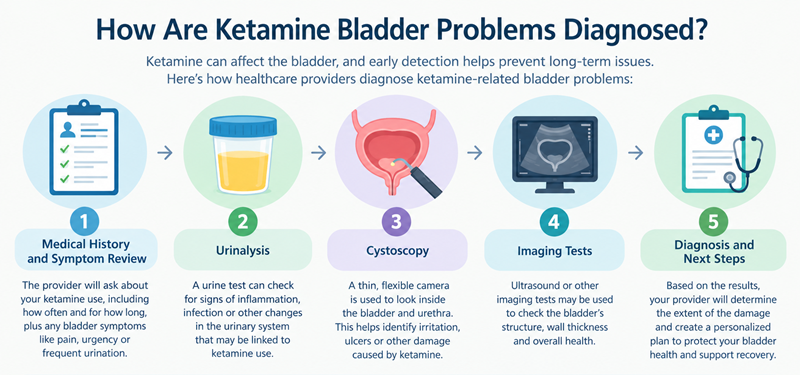
How Are Ketamine Bladder Problems Diagnosed?
If ketamine bladder symptoms do occur, evaluation typically starts with a thorough conversation regarding urinary changes and ketamine exposure.
Your healthcare provider might ask:
- How often you urinate
- Whether you have urgency or leakage
- Burning or pain while urinating (micturition) does not occur.
- Have experienced blood in your urine (haematuria)
- The duration of the symptoms
- The frequency of use of ketamine
- Taking a break from ketamine may or may not result in a change of the symptoms.
Tests may be ordered to check for infection, blood or other abnormalities, such as a urine test. Upper urinary tract involvement can be suspected and blood tests may be utilized to determine renal function.
Other tests may be used, such as ultrasound, other imaging, testing the bladder’s function, or inspection of the bladder using a small camera, based on symptoms. When there is a significant urinary issue suspected to be related to the use of Ketamine, research indicates that urine testing, kidney function testing, imaging, and bladder examination are utilized.
There are multiple conditions of the urinary system that can present with similar symptoms, so it’s important to get the right evaluation.
How Are Ketamine Bladder Symptoms Treated?
The initial treatment for ketamine bladder symptoms is to find and treat the cause of the urinary irritation. If you are taking ketamine for non-clinical reasons, it is important to discontinue ketamine because this helps to reduce exposure.
A health care provider also might discuss pain, urgency to urinate, inflammation, and infection if present, or other urinary issues. Severe cases might need a urology specialist’s evaluation.
Early symptoms might improve after stopping ketamine, but if the damage to the urine is severe or long lasting, more comprehensive treatment may be needed.
Never presume antibiotics will fix the problem. The bladder symptoms associated with ketamine use can be similar to those of a urinary infection, but some reports have reported urinary symptoms without any bacterial infection.
If you’re in psychiatric treatment, you should talk openly with your care providers about your use of ketamine so they can better understand your situation and coordinate support.
For those who have concerns about the use of ketamine, urinary changes, or mental health in general, Orlando Premier Psychiatry provides psychiatric treatments tailored to the individual needs and ongoing care. Talk to the office about your concerns and options.

How Can You Reduce the Risk of Ketamine Bladder Problems?
The key to minimizing ketamine bladder symptoms is to refrain from using the drug repeatedly for non-medical purposes.
If you have been prescribed ketamine as part of psychiatric treatment, stick to the instructions from your health care provider. Never self-administer the amount and/or frequency.
- Other Report any changes in the bladder early.
- Never ignore blood in the urine.
- If the bladder pain does not go away if you’re persistent.
- Adhere to suggested follow-up visits.
- Provide your health care provider with details of all substances used.
- Do not assume that if it is a new urinary symptom that it is a urinary infection.
- If using the drug ketamine is hard to manage, ask for assistance.
When looking for psychiatry near me, psychiatrist orlando or psychiatrist orlando fl, it is important to seek professional help in order to make safer decisions.
If someone is thinking about trying a ketamine infusion, it’s important to also talk to the right psychiatric team about urinary health. When patients seek information like “ketamine infusion Orlando” or “ketamine infusion Orlando FL” or “ketamine infusion near me,” it is important to engage in thoughtful discussions regarding individual risks, medical background, and continuous monitoring.
When Should You See a Healthcare Professional About Bladder Symptoms?
If you notice ketamine bladder symptoms, do not ignore them, particularly if they take a turn for the worse.
If you have these symptoms, seek immediate medical attention:
- Blood in your urine
- Very painful urinary or lower abdominal pain
- Dysuria that does not get better
- Increased urinary urgency, or urination frequently and urgently.
- Difficulty passing urine
- Inability to hold urine, the inability to control urination.
- Fever, or other symptoms of infection.
- Severe pain in the back or sides
- Significant decrease in urine production
Ketamine side effects on the urinary system may go beyond the bladder. In severe cases, narrowing of the ureters and hydronephrosis have been reported, as well as other complications of the upper urinary tract.
Early evaluation can help determine the cause and minimise the risk that an untreated urinary problem will become more serious.
If you live near Orlando and are seeking psychiatric treatment in Orlando, contact Orlando Premier Psychiatry to speak about psychiatric issues, medication, and next steps regarding ketamine. To find more information about psychiatric services available call (407) 565-3546.
Medical Disclaimer: This information is for educational purposes only and does not constitute medical advice.
Frequently Asked Questions
Can ketamine affect kidney function as well as the bladder?
Yes. Ketamine-induced severe urinary problems may progress to the ureters and kidneys. Possible side effects are narrowing of the ureters, hydronephrosis, and, in severe cases, reduced renal function.
Does the amount of ketamine used affect the risk of urinary problems?
Increased and/or more frequent exposure seems to heighten concerns, especially when it comes to repeated non-medical use. But, it has not been determined that a definite quantity can be used to predict urinary damage for everyone. Individual factors are also important.
Can ketamine bladder symptoms occur after occasional use?
The risks associated with most of the serious bladder issues reported in studies have been as a result of repeated or high doses of ketamine. However, each person is unique and new urinary symptoms need not be dismissed because the use was infrequent.
Are ketamine-related urinary problems more common with long-term use?
Yes. Repeated, long-term or high doses of ketamine have most commonly been associated with serious urine complications. However, the studies available do not identify a single exposure time at which bladder problems may occur.
Can bladder problems from ketamine affect sexual or reproductive health?
Potentially. If a person develops problems in the upper urinary tract, severe changes in the urinary tract can impact other urinary and reproductive structures. If urinary or sexual symptoms persist, it should be talked with a competent health care provider.
What tests can help identify ketamine-related urinary complications?
Tests may involve urinalysis, urine culture, blood tests of kidney function, imaging (ultrasound), bladder-function testing, examination of the bladder (if applicable). Tests chosen are based upon symptoms and suspected urinary problem.
Can stopping ketamine prevent bladder symptoms from getting worse?
If you continue to use ketamine, it may cause more irritation, and some early symptoms may get worse.Cessation of continued exposure to ketamine can lead to a decrease in further irritation, and some early symptoms may get better. However, if he or she has had bladder or UT damage that may continue, it is important to have a professional evaluate him or her.
Do ketamine bladder problems affect everyone who uses ketamine?
No. However, urinary issues do not always occur in people who use ketamine. Risk seems to change depending on individual, frequency, amount and duration. Different urinary findings are also seen between different people who use ketamine for psychiatric care.
References
- National Library of Medicine, PubMed: research on ketamine-associated urinary tract dysfunction. PubMed research on ketamine-associated urinary tract dysfunction
- National Library of Medicine, PubMed: review of ketamine-related bladder inflammation and urinary complications. PubMed review of ketamine-induced bladder problems
- National Library of Medicine, PubMed: 2025 systematic review of urinary symptoms following ketamine use in psychiatric settings. 2025 systematic review on ketamine and urinary symptoms
- BMJ: urinary tract disease associated with chronic ketamine use. BMJ research on ketamine-associated urinary tract disease