You might have asked yourself what an addiction psychiatrist does, and you aren’t alone. They are physicians who have specialized and extended training in the treatment of Substance Use Disorders (SUDs) and are uniquely qualified to help those who have co-occurring mental health issues as well.
One of the main things an addiction psychiatrist will do differently than many other doctors is to take both emotional and physical factors of addiction into account, determine if there are any underlying mental health conditions present, and prescribe targeted medication.
Our goal at Orlando Premier Psychiatry is to provide patients with psychiatric services that are compassionate and work to support a lifetime of health and wellness for the individual and their family in an effort to gain stability and improve quality of life.
Addictions can impact far more than a person’s physical health. They affect relationships, work, school, finances, and emotional health. Many individuals struggling with addiction also suffer from anxiety, depression, trauma, ADHD, or bipolar disorder. These conditions are deeply interconnected, and a treatment plan is much more effective when an addiction psychiatrist provides care—because they understand the complex nature of co-occurring disorders and see the big picture.
Key Takeaways
- Addiction psychiatrists are physicians who have completed both a psychiatric specialty training and a training in addiction.
- They identify addictions and can identify someone who has mental health and addiction problems.
- They have the authority to prescribe medication, as needed, and monitor the results.
- These include elements of care that are often included in medication management, psychiatric assessments, education and co-ordinating with other health care professionals, counsellors.
- If psychiatric treatment were to occur early, then there is a possibility that the person will have a better chance of improvement and good mental health in the long run.
What Does an Addiction Psychiatrist Do?
An addiction psychiatrist is someone who focuses on the brain and mind’s effect when it comes to addiction. They discuss with patients their drug use, mental health symptoms, medical history, medications, and lifestyle factors during appointments.
An Addiction psychiatrist may:
- Review and conduct a comprehensive psychiatric evaluation
- Accurately diagnose Substance Use Disorders (SUDs)
- Identify signs and symptoms of anxiety, depression, PTSD, ADHD, and/or bipolar disorder (or other co-occurring disorders)
- Prescribe and monitor psychiatric medication, as appropriate
- Adjust meds for progress as needed
- Schedule appointments with primary care physicians, psychologists/therapists and addiction counselors
- Develop individual LTC plans.Develop individual long term psychiatric care plans.
- Support to minimise the risk of relapse by the management of any underlying psychiatric symptoms.
An addiction psychiatrist does not only consider addiction, but also the interconnection between mental health and the use of substances.
What Conditions Does an Addiction Psychiatrist Treat?
An Addiction Psychiatrist can assist those who are addicted to any drugs or alcohol including:
- Alcohol use disorder
- Opioid use disorder
- Prescription medication misuse
- Stimulant use disorder
- Cannabis use disorder
- Nicotine dependence
- Sleep or “downing” medications (benzodiazepines)
They also discuss and address other mental health problems that often accompany drug use such as:
- Depression
- Anxiety disorders
- Bipolar disorder
- PTSD
- ADHD
- Obsessive-compulsive disorder (OCD)
- Personality disorders
- Sleep disturbances and insomnia
The treatment of mental health issues along with substance use disorders can have better results, as mental health disorders can contribute to substance use.
When Should You See an Addiction Psychiatrist?
People rarely visit a psychiatric facility until they are unable to deal with the problems of addiction. However, early support is likely to have long term benefits.
Think about booking a visit if you:
- Has trouble refraining from drinking or using drugs
- Experience repeated relapses
- Watch for signs of anxiety and/or depression
- Take lots of time to get high or intoxicated
- Needs to be medicated during convalescence
- Be addicted and suffer from a second mental health issue
- A thorough psychiatric examination is available.
An addiction psychiatrist is a specialist who prescribes and diagnoses addictions.If family members notice any behavioural and/or emotional changes, they can also refer the person for an assessment of their addiction disorders by a psychiatrist.
If you’ve done your search for psychiatry near me, psychiatrist near me, and/or psychiatrist Orlando, you’ll see the difference that it would make to choose a psychiatrist who has experience in the field of addiction as well as mental health.
Looking for Compassionate Psychiatric Care?
Orlando Premier Psychiatry has highly-trained psychiatric providers that provide in-depth evaluations, medication management and customized mental health services for adults, teens and families. If you need help and support to help you deal with addiction problems or with any other psychiatric disease or disorder, you can consult our team for their guidance and support.
Make an appointment today to start individual psychiatric treatment.
What to Expect During Your First Appointment
The initial visit to an addiction psychiatrist should be focused on determining the entire history of your past health care.
The following will be included in the appointment:
Medical History
Your psychiatrist reviews:
- Your psychiatrist reviews:
- Current medications
- Past medical conditions
- Previous psychiatric diagnoses
- Family history
- Previous hospitalizations
Mental Health Assessment
Questions could be on the subject of:
- Mood
- Anxiety
- Sleep
- Stress
- Trauma history
- Daily functioning
Substance Use History
You may discuss:
- What are the resources that are employed?
- Frequency
- Duration
- Previous attempts to stop
- Withdrawal symptoms
Treatment Planning
Your addiction psychiatrist shares information and reviews recommendations based on your information, goals and overall health.
How Addiction Psychiatrists Diagnose Substance Use Disorders
Diagnosis isn’t solely about people drinking or using drugs.
An Addiction Psychiatrist thinks about:
- Without a control of substance use
- Cravings
- Withdrawal symptoms
- Tolerance
- Impact on relationships
- Conduct in work/school.
- Physical health effects
- Emotional well-being
The American Psychiatric Association has published a diagnostic manual, the Diagnostic and Statistical Manual of Mental Disorders (DSM-5-TR), which is used by psychiatrists.
Psychiatric evaluations are performed to gain a better understanding of any other potential underlying issues that can cause addiction, such as depression, anxiety, trauma, and even ADHD.
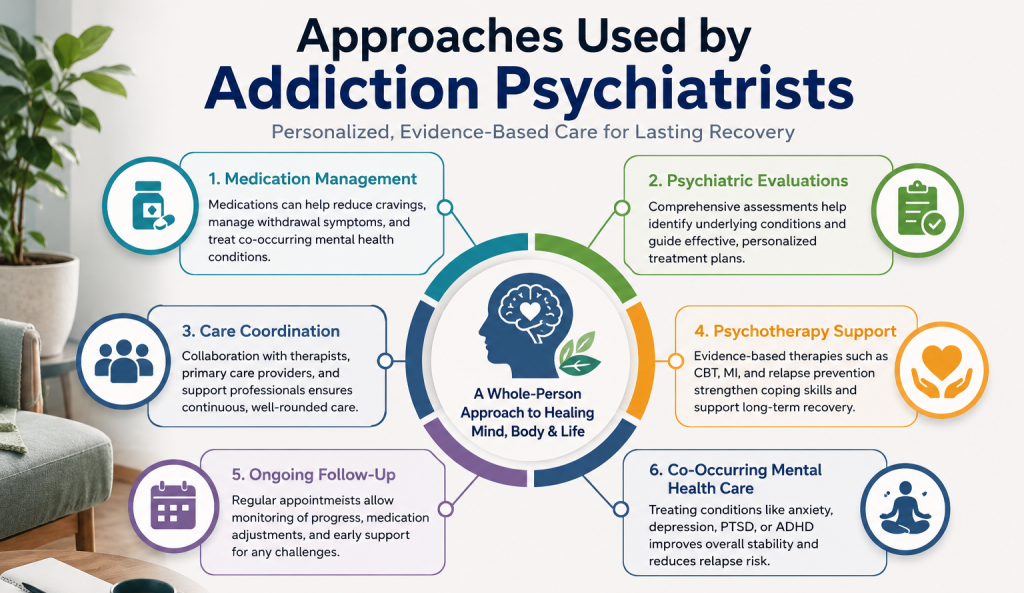
Treatment Approaches Used by Addiction Psychiatrists
All people receive a treatment plan that is specific to their symptoms, medical history and treatment goals.
Common approaches include:
Medication Management
Certain medications can reduce cravings, stabilize mood, relieve severe mental health symptoms, and support safe recovery. Addiction psychiatrists closely monitor these prescriptions for safety and efficacy. Understanding what is medication management can help patients feel confident throughout this process.
Psychiatric Evaluations
Regular progress checks ensure that medications and care plans remain effective as recovery progresses. A comprehensive psychiatric evaluation for adults serves as the foundation for this ongoing support.
Care Coordination
Typically, an addiction psychiatrist will work closely with:
- Therapists
- Psychologists
- Primary care providers
- Social workers
- Recovery support professionals
This partnership has been working towards continuity of care.
Ongoing Follow-Up
Recovery is not an appointment, it’s not a destination, it’s a journey.
Follow up visits are used by psychiatrists to:
- Review progress
- Monitor medications
- Address new symptoms
- Adjust treatment recommendations
Co-Occurring Mental Health Care
Having anxiety, depression, PTSD, bipolar disorder or ADHD may be more manageable when combined with addiction.
Benefits of Working with an Addiction Psychiatrist
There are a number of benefits to selecting an addiction psychiatrist.
Comprehensive Medical Expertise
Psychiatrists are aware of the link between mental diseases, medicine, and substance abuse.
Accurate Diagnosis
So, they take a look at more than just addiction.
Medication Management
Prescription Drugs are closely monitored to ensure their safety and effectiveness.
Long-Term Support
Regular exams are conducted to aid in identifying changes in time early on before symptoms worsen.
Coordinated Care
A more holistic care experience as providers are connected to each other.
How to Choose the Right Addiction Psychiatrist
There are several important questions that you should ask when you’re looking for the best addiction psychiatrist.
Seek someone who:
- Is Board Certified in Psychiatry.
- Has experience of treating SUDs
- Carries out comprehensive psychiatric evaluations
- Drug Management – if applicable
- Communicates clearly
- Listens without judgment
- Implements individualized plans of care
- Cooperates with other health care professionals
Additional factors to keep in mind include appointment availability, whether they offer secure virtual psychiatry services, and insurance coverage.
For residents in Central Florida searching for quality care in Orlando, Altamonte Springs, Oviedo, or Kissimmee, finding an experienced local provider is essential. Furthermore, for patients exploring innovative treatments for treatment-resistant mood conditions, options like Ketamine Therapy may also be discussed during evaluation.
However, if the patient is a teenager, the family should seek child psychiatry, child psychiatry near me, child psychiatry Orlando, or child psychiatry Orlando FL for the children.
While communicating with your provider about the psychiatric treatment that you may be able to access, you may also consider exploring ketamine infusion, ketamine infusion Orlando, ketamine infusion Orlando FL, and ketamine infusion near me.

Why Choose Orlando Premier Psychiatry?
At Orlando Premier Psychiatry, we offer compassionate psychiatric care that is personalized.
Our services include:
- Comprehensive psychiatric evaluations
- Expert medication management
- Adult, child, and adolescent psychiatric care
- Convenient telehealth appointments across Florida
- Ongoing follow-up care and multi-provider coordination
Our experienced psychiatric team believes everyone deserves evidence-based mental health support in a welcoming, respectful environment.
Take the First Step Toward Better Mental Health
Addiction and mental health issues can be impacting your life or someone you care about; psychiatric assistance can help. Orlando Premier Psychiatry‘s team of experts delivers compassionate psychiatric assessments, medication management, and personalized services tailored to your specific needs.
Call Orlando Premier Psychiatry today to book an appointment and discover how tailored psychiatric treatment can promote your overall mental health.
Frequently Asked Questions
Is an addiction psychiatrist the same as a therapist?
No. An addiction psychiatrist is a physician specializing in psychiatric medicine who is able to diagnose mental health disorders, prescribe psychiatric medications, and provide psychiatric care. Therapists are individuals who counsel, but are not usually the ones prescribing medication.
Can an addiction psychiatrist prescribe medication?
Yes. As a licensed physician, an addiction psychiatrist can prescribe medications, track side effects, make changes to the medication regimen, and manage your medication when you have a substance use disorder or have a mental health disorder that requires a medication.
What is the difference between an addiction psychiatrist and an addiction counselor?
An addiction psychiatrist is a doctor who can diagnose mental health problems and prescribe drugs if needed. While the most common roles of addiction counselors involve counseling, education, behavior modification, and recovery planning, they rarely prescribe drugs.
Do I need a referral to see an addiction psychiatrist?
Numerous patients need not have a referral, though this may differ depending on insurance plan. Before your first appointment, check with your insurance company or the psychiatric practice to determine coverage and appointment schedules.
How long does addiction psychiatric care last?
The duration of care depends on individual needs, condition severity, and personal recovery goals. Some individuals benefit from short-term medication stabilization, while others maintain periodic follow-up check-ins for long-term health and stability. Have additional questions? Visit our FAQ page for more details.
Disclaimer
The information in this blog is for educational and informational purposes only and is not intended to be medical advice, diagnosis or treatment. Please always speak to a qualified psychiatrist or other licensed health care provider about your medical or mental health issues. In the case of a medical or psychiatric emergency, dial 911 or go to your local emergency department as soon as possible.
References
- American Psychiatric Association. Diagnostic and Statistical Manual of Mental Disorders (DSM-5-TR). https://www.psychiatry.org/
- National Institute on Drug Abuse (NIDA). https://nida.nih.gov/
- Substance Abuse and Mental Health Services Administration (SAMHSA)
- National Institute of Mental Health (NIMH). https://www.nimh.nih.gov/
- American Society of Addiction Medicine (ASAM). https://www.asam.org/